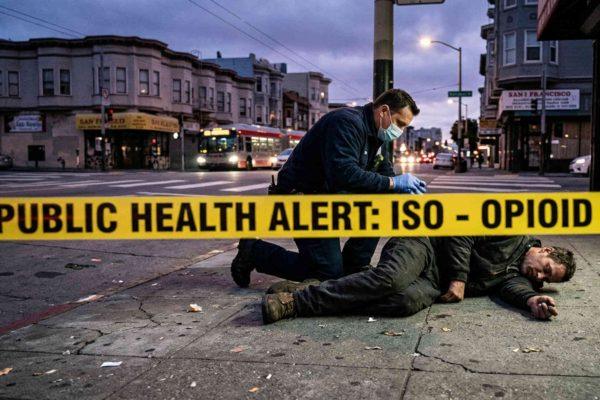
San Francisco is grappling with a new wave of overdose deaths driven by ISO, a synthetic opioid that authorities say is up to 20 times stronger than fentanyl. Known chemically as isotonitazene, the substance first appeared in the city in April and has since turned the streets of the Tenderloin district into a scene of mounting despair. Unlike fentanyl, ISO has no approved medical or industrial use, yet it remains cheap and is frequently mixed into other opioids, leaving users unaware of what they are consuming.
An Invisible Threat on the Streets
What makes ISO particularly dangerous is its invisibility in standard drug tests. Rapid fentanyl screenings cannot detect it, meaning users have no way of knowing they are ingesting a lethal dose. Even more alarming, reports from the Drug Enforcement Administration indicate that many individuals suffering an ISO overdose do not respond to naloxone, the standard medication used to reverse opioid effects. This nullifies the primary emergency response tool, turning every potential overdose into a high-stakes gamble.
The crisis is fueled by illicit trafficking networks that prioritize potency over safety. Distributors in the Tenderloin mix ISO with other substances to increase their product's strength, creating a volatile cocktail that has already claimed multiple lives. The situation has forced local authorities to scramble for solutions, but the drug's resilience and low cost make it a persistent threat.
Community groups like Mothers Against Drug Addiction and Deaths have raised their voices, demanding concrete action from law enforcement and city officials. They argue that the current response is insufficient for a crisis that has surpassed tolerable limits. While cities like Los Angeles report that ISO has not yet become a primary threat, the trend of so-called "bathtub pharmacists" mixing chemicals across California suggests the risk is growing exponentially.
For Latino communities in San Francisco, many of whom work in service industries and live in neighborhoods like the Mission District, the crisis adds another layer of vulnerability. The city's recent minimum wage increase to $19.61 in 2026 was a win for Latino workers, but economic gains mean little when public health is under siege. The spread of ISO underscores the need for coordinated efforts that prioritize safety over political agendas.
Experts emphasize that education and vigilance are key. Preventive measures, including expanded access to testing strips that can detect ISO and increased distribution of naloxone alternatives, are critical. However, the drug's ability to evade detection and resist treatment means that only a comprehensive, multi-agency response can stem the tide.
As the crisis unfolds, the human cost remains the most devastating. Families in the Tenderloin and beyond are losing loved ones to a substance that offers no warning and no second chance. The streets of San Francisco, once a symbol of innovation and resilience, now serve as a grim reminder of the opioid epidemic's relentless evolution.