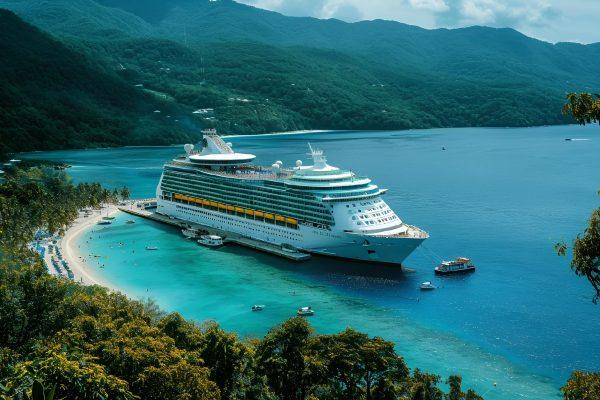
What should have been a smooth sail back from the sun-soaked shores of the Bahamas turned into a white-knuckle ride for passengers aboard Royal Caribbean's Oasis of the Seas. The massive vessel, heading to Bayonne, New Jersey, ran straight into a brutal Nor'easter that churned the North Atlantic into a cauldron of towering swells, some cresting past twenty feet.
For many aboard, the journey felt like a scene from a maritime thriller. Videos shared on social media showed walls of water slamming against the ship's hull, sending spray high into the air. Yet despite the drama, the cruise line's decision to push through the storm rather than divert was backed by a combination of cutting-edge naval engineering and meticulous meteorological planning.
Engineering that keeps the ship steady
The Oasis of the Seas is a floating city, and its design is built for rough seas. Its wide hull concentrates heavy machinery and fuel tanks low in the vessel, giving it an exceptionally low center of gravity. That stability is further enhanced by state-of-the-art stabilizer fins and automatic ballast pumps that shift weight in real time to counteract excessive rolling. These systems allow the ship to handle waves well over twenty-five feet, which is why the captain and crew felt confident navigating through the storm.
Behind the scenes, Royal Caribbean employs a dedicated team of marine meteorologists, including experts like Payton Collado, who monitor ocean currents and wind patterns around the clock. Their job is to anticipate sudden weather shifts and plot the safest course, ensuring that even the most aggressive swells are met with precision rather than panic.
Passenger experience and practical tips
While some travelers captured the dramatic moments on their phones, others took the rough seas in stride, enjoying meals in the main dining rooms as the ship pitched and rolled. For those with a more sensitive stomach, the constant motion can be a challenge, and seasoned cruisers recommend packing preventive medications like Dramamine for autumn Atlantic crossings.
This incident is a reminder that even the most idyllic Caribbean getaways can end with a bit of adventure. For those planning their own island escapes, it's worth noting that the Caribbean offers plenty of budget-friendly options that don't require a mega-ship. And if you're dreaming of a more secluded paradise, Dominica's untouched landscapes might be just the ticket.
The Oasis of the Seas eventually docked safely in Bayonne, and passengers walked off with stories to tell. The combination of advanced technology and experienced seamanship turned what could have been a nightmare into a memorable anecdote—one that underscores the resilience of modern cruise travel.
For those who follow the rhythms of the Caribbean, this storm is just another chapter in the region's long history of weather extremes. From the vibrant celebrations of Caribbean culture in Brooklyn to the music that keeps the diaspora connected, the sea remains a constant presence—sometimes calm, sometimes fierce, but always unforgettable.