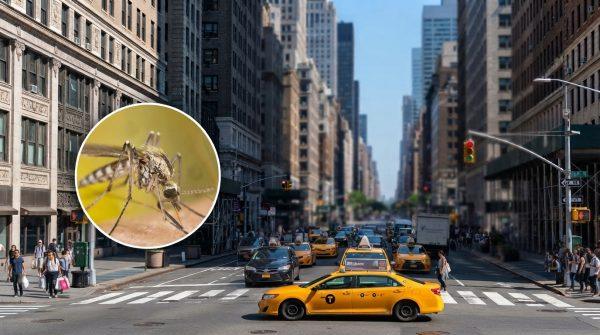
New York City is facing a sharp rise in West Nile virus cases this summer, with health officials reporting more than 30 confirmed infections across the five boroughs—surpassing last year's total of 18. The surge has prompted intensified mosquito control efforts and renewed calls for residents to protect themselves.
According to data from the New York City Department of Health and Mental Hygiene, Brooklyn leads with 11 cases, followed by Queens and Staten Island with 7 each. Manhattan and the Bronx report 2 and 3 cases, respectively. Of those infected, 24 have developed severe neuroinvasive conditions such as encephalitis or meningitis, while 6 have experienced milder fever symptoms.
Health director Salluy Slavinski attributes the rapid transmission to a combination of prolonged warm temperatures, heavy rainfall, and high humidity—conditions that accelerate both mosquito breeding and viral replication. "We're seeing a perfect storm for mosquito-borne disease," Slavinski said in a statement.
Why the numbers are likely higher
Medical experts caution that official figures probably underestimate the true scope of the outbreak. Many people infected with West Nile virus experience no symptoms or only mild flu-like illness, and they may never seek medical testing. "For every reported case, there could be many more undetected," said Dr. Elena Ramírez, an infectious disease specialist at a Queens hospital. "Especially in communities where access to healthcare is limited, people might just stay home and recover."
The city's mosquito surveillance program has recorded over 1,700 positive mosquito samples this season, compared to just over 1,300 last year—a record high. This data, reported by the New York Post, underscores the intensity of the current outbreak.
Environmental factors and city response
Warmer temperatures extend the transmission window, and higher humidity creates ideal breeding sites in stagnant water. City agencies have deployed specialized teams to treat catch basins, parks, and other standing water sources with larvicide and targeted pesticides. Sanitation crews are also conducting rigorous drainage inspections across affected neighborhoods.
"We're doing everything we can to reduce the mosquito population, but we need the public's help," said a spokesperson for the city's vector control program. "Residents can make a big difference by eliminating standing water around their homes."
Prevention tips for residents
- Remove standing water from flower pots, gutters, bird baths, and discarded containers.
- Use EPA-approved insect repellents containing DEET, picaridin, or oil of lemon eucalyptus.
- Wear long sleeves and pants during dawn and dusk, when mosquitoes are most active.
- Ensure window screens are intact to keep mosquitoes out of your home.
Health officials also urge property managers to report stagnant water accumulations promptly. For many Latino families in neighborhoods like Corona, Bushwick, and Sunset Park, these precautions are especially important, as outdoor gatherings and evening walks are common during the summer.
This outbreak comes as other parts of the country face similar mosquito-borne threats. In Florida, health alerts have been issued after the state recorded its first dengue death in nearly a century. And in Texas, red tide blooms have triggered beach advisories. While West Nile is rarely fatal, it can cause serious neurological damage, particularly in older adults and those with weakened immune systems.
As the city continues its fight against the virus, officials stress that vigilance is key. "We're in this together," said Slavinski. "By taking simple precautions, we can protect our families and our communities."
For more on how climate patterns are affecting health, check out our coverage of Super El Niño's impact on weather and Florida's dengue alert.