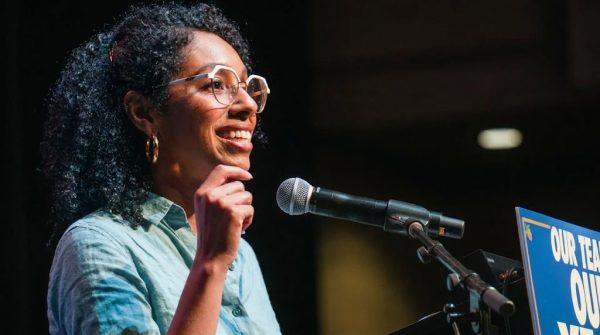
In a decisive victory that reshapes the political map of Upper Manhattan, Darializa Ávila Chevalier has defeated Republican challenger Manual “Jomo” Williams to become the next representative for New York’s 13th Congressional District. The Associated Press projects the win for the 32-year-old community organizer, who will now make history as the first woman—and the first Dominican—to ever hold this seat.
Ávila Chevalier’s rise is anything but conventional. A doctoral candidate at CUNY and a former legal defense advocate, she unseated nine-year incumbent Adriano Espaillat in the June primary, a victory that stunned many political insiders. Her campaign leaned heavily on grassroots organizing, mobilizing working-class communities across Washington Heights, Harlem, Inwood, and other neighborhoods that have long been the heart of the district.
From community organizer to congressional trailblazer
Born to Dominican parents, Ávila Chevalier grew up in the same neighborhoods she now represents. Her academic work in Middle Eastern Studies and her time with the Neighborhood Defender Service of Harlem gave her a front-row seat to the systemic challenges facing immigrant families and low-income residents. That background, she says, is exactly what she plans to bring to Washington.
“Sociological research and community organizing form the core of the transformative policies introduced by the incoming congresswoman,” said Zohran Mamdani, a state assemblymember who supported her campaign. Her platform reflects that commitment: she has called for abolishing ICE, guaranteeing access to public services regardless of immigration status, and pushing for Medicare for All. She also advocates raising the federal minimum wage, expanding childcare support, and reallocating military spending toward education and healthcare.
Her victory is being celebrated by local leaders and activists who see it as a turning point for representation. “This is about more than one election,” said María Fernanda López, a community organizer in Washington Heights. “It’s about showing that our communities can lead, not just be led.”
Ávila Chevalier’s win also marks a generational shift. At 32, she is part of a wave of young, progressive candidates of color who are challenging the status quo. Her campaign was fueled by a coalition of tenant unions, immigrant rights groups, and labor organizations, all of whom are now watching to see how she translates her promises into legislative action.
“I’m not going to Washington to play it safe,” she said in her victory speech. “I’m going to fight for the families who raised me, the neighbors who knocked on doors, and the future we deserve.”
Her election comes at a time when Latino political power is growing across the country, from local school boards to Congress. As she prepares to take office, Ávila Chevalier carries with her the hopes of a district that has long been a gateway for immigrant communities. Her story is a reminder that political change often starts at the grassroots, and that representation matters in ways that go beyond symbolism.