New York City has long been a place where hard work is supposed to pay off. But for many Latino families, that promise is slipping away. A report released on April 6, 2026, by the Mayor's Office of Equity and Racial Justice and the Urban Institute paints a stark picture: 77.6% of Latino households in the five boroughs don't earn enough to cover the real cost of living—rent, food, childcare, healthcare, and transportation.
That number is far higher than for other groups: 65.6% of Black households, 63.3% of Asian and Pacific Islander households, and 43.7% of non-Latino white households fall below the same threshold. The gap is even more dramatic in Manhattan, where 85.3% of Latino residents can't meet basic needs, compared to just 32.9% of white residents.
“This is not about people not working,” said Jennifer Jones Austin, CEO of FPWA, an anti-poverty organization. “It's about wages that haven't kept up with the cost of housing and childcare in this city.” Indeed, more than 80% of affected households include at least one working adult.
Why the official poverty line misses the mark
The federal poverty guideline for a family of four in 2026 is about $33,000 a year. But the Fund for the City of New York calculates that a family with two adults, a preschooler, and a school-age child needs between $125,800 in the Bronx and $167,300 in lower Manhattan just to cover essentials. Rent alone in Queens for a two-bedroom apartment averages nearly $36,000—more than the entire federal poverty line.
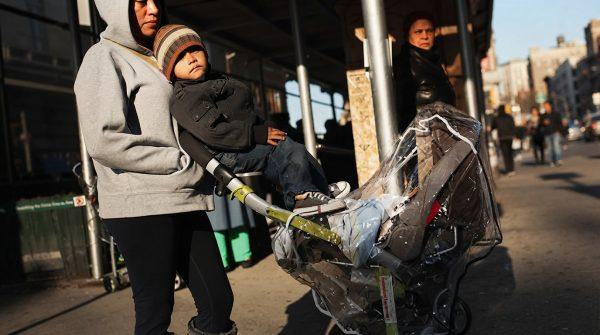
Childcare is another crushing expense. In Queens, caring for a preschooler and a school-age child costs over $33,300 a year, according to FCNY. That's more than many families earn in total. “You work full-time, sometimes two jobs, and still you're choosing between paying the rent and buying groceries,” said María González, a mother of two in Bushwick, Brooklyn.
The report is the first under a city law approved by 81% of voters that requires annual reporting on the true cost of living. It found that 62% of all New Yorkers—5.04 million people—live below the threshold. Nearly 73% of children and over 90% of single-parent households are affected.
How families are coping
Faced with these numbers, many Latino families are turning to public assistance programs they might have avoided before. SNAP (food stamps) helps cut grocery bills, and Medicaid covers healthcare costs that could otherwise lead to medical debt. Community organizations offer free financial counseling to help restructure high-interest debts before they spiral.
Childcare subsidies through local agencies are another lifeline. For renters facing eviction, there are prevention programs and municipal rent subsidies. But navigating these systems can be overwhelming, especially for immigrants who may fear that using public benefits could affect their immigration status.
“We see families who qualify for help but don't apply because they're scared or don't know how,” said Luis Torres, a housing counselor at a nonprofit in the South Bronx. “Our job is to break down those barriers.”
The report also highlights the need for systemic change. Advocacy groups are pushing for policies that tie wages to the real cost of living, expand affordable housing, and make childcare more accessible. Some are also exploring how the NYC affordable housing lottery works as a potential route to stability.
But for many, the immediate struggle is daily. “We're not asking for a handout,” said González. “We just want to be able to live with dignity.”
The city's equity office says it will use the data to target resources and programs. But as the report makes clear, the problem is not just about finding a job—it's about making sure that job pays enough to survive in one of the most expensive cities in the world.
For Latino families, the stakes are personal. They are the ones driving the city's economy, working in restaurants, construction, healthcare, and childcare. Yet they are the ones most likely to fall short. The question now is whether the city will respond with the urgency the crisis demands.