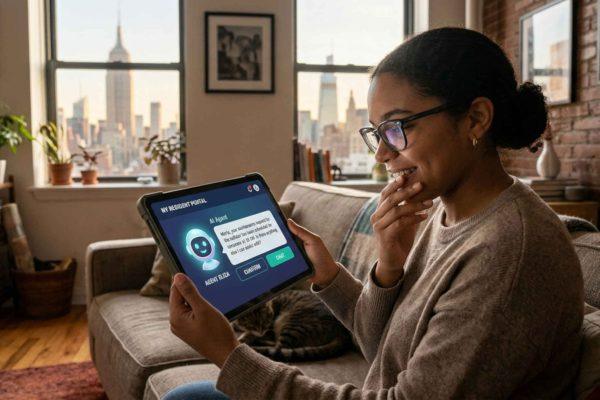
For generations, renting an apartment in New York has meant dealing with a human landlord or super—someone you call when the heat goes out in January or when the sink starts leaking. That could soon change. According to industry projections, artificial intelligence agents are poised to take over many of the tasks that human property managers currently handle, from showing apartments to processing lease renewals and even coordinating repairs.
The CEO of Rentberry, a platform that already uses AI in some markets, has stated that these digital agents will eventually manage nearly every stage of the renting process across the United States. In a city as competitive as New York, where finding an apartment can feel like a full-time job, the promise of speed and efficiency is tempting. But for the city's large Latino community—many of whom rely on personal relationships and word-of-mouth to secure housing—the shift raises important cultural and practical questions.
What AI Could Mean for Latino Renters
For Latino renters in neighborhoods like Washington Heights, Bushwick, or Sunset Park, the rental process is often deeply personal. Landlords may speak Spanish, accept cash payments, or offer informal lease terms. An AI agent, no matter how sophisticated, cannot replicate that human touch. However, the technology could also level the playing field by reducing discrimination and ensuring that all applicants are evaluated by the same objective criteria. Renters Gain Upper Hand as U.S. Apartment Glut Drives Historic Concessions shows that market conditions are already shifting power toward tenants, and AI could accelerate that trend.
Automated systems can handle background checks, credit evaluations, and lease signings around the clock, eliminating the need to wait for a human to return a call. They can also log maintenance requests instantly and dispatch workers without the delays that often frustrate tenants. For a renter in a busy household—perhaps a first-generation immigrant working multiple jobs—that 24/7 availability could be a game-changer.
The Trade-Offs of Automation
Yet the move toward AI also brings risks. Algorithms are only as fair as the data they are trained on, and there is ample evidence that automated systems can perpetuate bias. A landlord who might have discriminated against a tenant based on accent or national origin could now hide behind a supposedly neutral AI. The 30% Rent Rule Is Dead: How Latino Renters in the U.S. Can Adapt offers strategies for navigating a changing rental landscape, but it also underscores the need for transparency in how these AI agents make decisions.
Another concern is the loss of personal negotiation. Many Latino renters have successfully negotiated rent reductions or flexible move-in dates by speaking directly with a landlord. An AI agent programmed to stick to a fixed price may not offer that flexibility. On the other hand, AI could also eliminate the awkwardness of haggling, providing a clear, consistent process for everyone.
Real estate platforms are investing heavily in these systems, betting that the convenience of instant responses and automated workflows will outweigh any nostalgia for the human touch. In cities like Houston and Dallas, where the apartment market is booming, similar technologies are already being tested. Texas Apartment Market Booms as Renters Flock to Sun Belt Cities Like Houston and Dallas highlights how different markets are adapting to new rental technologies, offering a glimpse of what New York might soon experience.
For now, the transition is not complete. Many landlords still prefer the personal connection, and tenant advocacy groups are pushing for regulations that require a human backup option. But the direction is clear: the next time you search for an apartment in New York, the voice on the other end of the line may not be human at all. It will be an AI agent, ready to help—but also ready to follow a script.