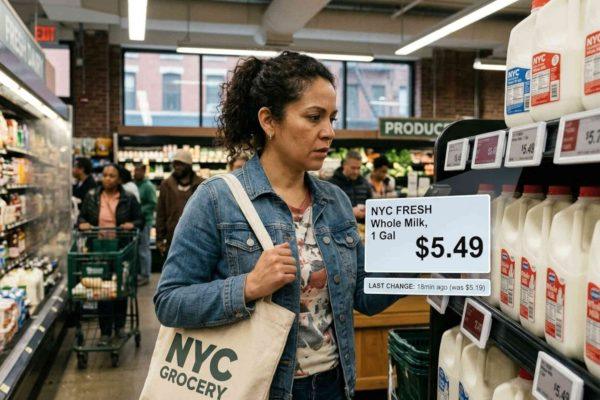
New York City is taking a stand against the rapid price swings that have left many shoppers frustrated at the checkout counter. A new bill introduced in the City Council would limit how often grocery stores can change their prices, effectively banning the practice known as dynamic pricing. Under the proposed law, retailers would only be allowed to adjust prices once every 24 hours, putting an end to the kind of real-time cost fluctuations that have become common with digital shelf labels and algorithmic pricing systems.
The legislation, championed by Council Member Shaun Abreu, aims to bring transparency back to the aisles. “The price a consumer sees when they walk into the store should be the same one they pay at the register,” Abreu said in a statement. The bill would impose fines on stores that violate the rule: $50 for a first offense, $170 for a second, and $250 for each subsequent violation. These penalties are designed to create a clear accountability framework for retailers.
Why This Matters for Latino Shoppers
For many Latino families in New York, grocery shopping is a weekly ritual that has become increasingly unpredictable. Inflation has already stretched household budgets, and the added uncertainty of prices changing from one hour to the next has made it harder to plan meals or stick to a budget. This bill is a direct response to those pressures, aiming to protect consumers from what critics call unfair pricing tactics.
The push for price stability comes as part of a broader effort by state authorities, including New York Attorney General Letitia James, to crack down on the use of surveillance data in setting prices. James has been vocal about the need to protect communities from algorithms that can manipulate costs based on a shopper’s location, browsing history, or even the time of day. For Latino New Yorkers, who make up a significant portion of the city’s population, these protections are especially important in neighborhoods where grocery options are already limited.
This isn’t just a New York story. Across the country, similar concerns about dynamic pricing have emerged, from rising rents in Miami to the broader impact of inflation on Latino seniors. The New York bill could set a precedent for other cities grappling with the same issues.
The legislation also reflects a growing skepticism toward the tech-driven pricing models that have become common in retail. Electronic shelf labels, which allow stores to update prices instantly, have been praised for their efficiency but criticized for creating confusion and mistrust among shoppers. By requiring a 24-hour price freeze, the bill seeks to restore a sense of fairness to the shopping experience.
While the bill has broad support among consumer advocates, some retailers have pushed back, arguing that dynamic pricing helps them stay competitive and pass savings on to customers. But for now, the City Council appears focused on the needs of everyday New Yorkers, many of whom are still recovering from the economic shocks of the pandemic.
As the bill moves through the legislative process, it will be worth watching how other cities respond. For Latino communities across the U.S., where grocery costs often take a larger share of household income, this kind of regulation could offer a much-needed buffer against the volatility of modern pricing.