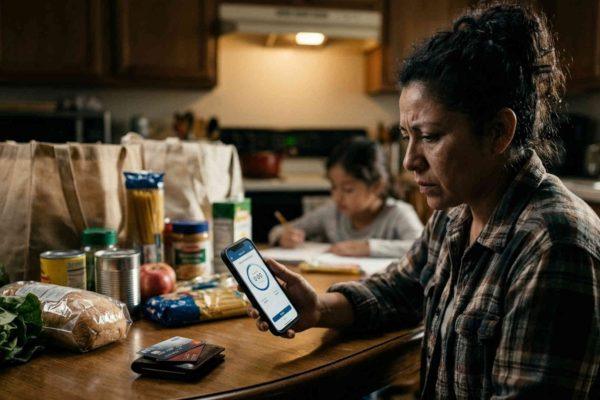
For thousands of families across the United States, the monthly ritual of checking the EBT balance has turned into a source of dread. Instead of seeing the expected food assistance, they find a zero balance—their benefits gone in a matter of minutes, even though the card never left their wallet. This is the reality of a growing wave of EBT card skimming, a sophisticated form of fraud that is devastating households, particularly within the Latino community.
Unlike traditional theft, skimming doesn't require a physical confrontation or a stolen wallet. Criminal networks, often operating internationally, secretly install small devices on payment terminals at grocery stores and other retailers. These devices capture the magnetic stripe data from EBT cards when they are swiped. With that information, thieves create duplicate cards and use them to make purchases in other states, often draining the entire monthly benefit before the victim even realizes what happened.
The financial toll is staggering. According to reports from the U.S. Department of Agriculture, losses from SNAP fraud have exceeded $230 million over the past two years. For families who depend on these benefits to put food on the table, the impact is immediate and severe. Parents are forced to skip meals, take on extra work, or fall into debt just to cover basic groceries. The emotional weight of this loss is compounded by the fact that these are not just dollars—they are the means to feed children and maintain dignity.
A technological gap leaves EBT cards vulnerable
One of the core reasons this fraud is so widespread is the outdated technology used for EBT cards. While most bank cards now come with embedded microchips that offer strong encryption, EBT cards still rely on the older magnetic stripe technology. This makes them an easy target for skimming devices, which can read the stripe data with minimal effort. The lack of a chip means that even when a family swipes their card at a legitimate terminal, the data is vulnerable to interception.
This technological lag is not just an inconvenience—it's a systemic failure that disproportionately affects low-income families, many of whom are Latino. In states like California, where chip-enabled EBT cards have been rolled out, the number of skimming incidents has dropped significantly. But the federal government has been slow to mandate this upgrade nationwide, leaving millions of families in other states exposed.
Advocates argue that the solution is clear: EBT cards must be brought up to the same security standards as private bank cards. This would not only protect benefits but also reduce the burden on state agencies that are currently overwhelmed with fraud claims. However, the transition requires funding and political will, both of which have been lacking.
Legislative efforts and the push for change
In response to the crisis, several states have begun to take matters into their own hands. California's success with chip cards has become a model for others, and there is growing pressure on Congress to pass legislation that would require chip technology in all EBT cards. Some lawmakers have also proposed measures to reimburse victims of skimming, similar to the protections that private banks offer their customers. Currently, EBT cardholders do not have the same automatic refund rights, which means many families are left without recourse after their benefits are stolen.
The urgency of this issue cannot be overstated. For many families, SNAP benefits are not just a supplement—they are the primary source of food. The loss of these benefits can push households into food insecurity, a problem that already affects millions of Latino families across the country. As the summer food benefits program faces its own challenges, the need for a secure and reliable system becomes even more critical.
While the federal government deliberates, families are left to navigate a system that feels increasingly unsafe. Some have turned to community organizations for help, while others are simply trying to stretch what little they have left. The emotional toll is immense, as parents struggle to explain to their children why the refrigerator is empty.
There is also a broader concern about the impact on the Latino community, which has historically faced higher rates of food insecurity. The loss of SNAP benefits not only affects individual families but also undermines the economic stability of entire neighborhoods. When families cannot afford to buy food, local grocery stores lose business, and the ripple effects are felt throughout the community.
As the debate over EBT security continues, one thing is clear: the current system is failing the people it is meant to serve. The transition to chip-enabled cards is not a luxury—it is a necessity. Until then, families will continue to live in fear of the next swipe, wondering if their benefits will still be there when they need them most.
For those who have been affected, the advice is to check balances regularly, report any suspicious activity immediately, and consider using the benefits as soon as they are loaded to minimize the window for theft. But these are stopgap measures. The real solution lies in systemic change, and that change cannot come soon enough for the families who are counting on it.