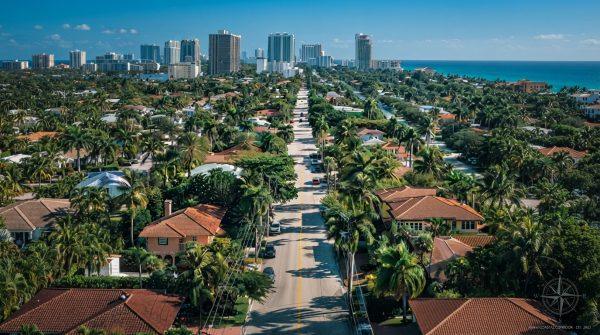
For many in Miami, the path to homeownership now runs through the gas station and the supermarket. The latest inflation data shows that everyday expenses are climbing faster in South Florida than in the rest of the country, and that gap is reshaping who can afford to buy a home.
In the Miami–Fort Lauderdale–West Palm Beach metro, consumer prices rose 3.7% over the past year, according to the U.S. Bureau of Labor Statistics. That's higher than the 3.4% national urban average. The biggest culprits: transportation costs, up 6.7%, and essential utilities. For a family saving for a down payment, every extra dollar spent on fuel or groceries is a dollar that won't go toward a home.
Consider the numbers: the median home price in the region is now $583,705. A standard 20% down payment means coming up with $116,741 in cash. With inflation eating into savings, that goal becomes more elusive for many middle-class families.
The squeeze doesn't stop at savings. Lenders look at debt-to-income ratios, typically capping total debt payments at 43% of gross monthly income. At current mortgage rates around 7%, an extra $200 per month on fuel reduces borrowing power by about $25,000. That's a significant hit for first-time buyers in a market where every dollar counts.
What's driving the higher costs?
Several key categories are pushing up the cost of living in Miami:
- Gasoline: Prices are up 34% year over year, with a 9% spike in September alone. That directly cuts into the cash reserves buyers need for earnest money and closing costs.
- Food: Grocery prices have risen 2.5% over the past year, tightening household budgets for families searching for single-family homes.
- Airfare: Airline fares have jumped more than 22% since September 2025, adding to transportation expenses for those who travel.
- Electricity: Utility bills are up 4.4%, largely due to constant air conditioning use in the Florida heat. This also raises the ongoing cost of owning a home.
Some categories, like used cars and medical goods, have seen slight price declines, but those haven't been enough to offset the broader energy and food surges.
Interest rates and the market freeze
There was a brief moment of hope when September unemployment figures ticked up, suggesting the Federal Reserve might ease off on rate hikes. But that optimism faded quickly. According to CME Group, over 90% of market traders now expect another rate increase before the end of the year, with about 30% forecasting a half-point hike. That would push mortgage rates even higher, further cooling an already sluggish market.
Ana Bozovic, a real estate broker and founder of Analytics Miami, explains the ripple effect: when rates stay elevated, existing homeowners with sub-4% mortgages are reluctant to sell and give up their low rates. At the same time, developers are pulling back on new single-family construction. The result is a tight inventory—just 3.4 months of supply, well below the six-month benchmark for a balanced market.
This dynamic hits middle-income buyers hardest. Wealthier cash buyers, who make up 41% of local home sales compared to the national average of 28%, are largely unaffected by borrowing costs. They can swoop in and pay cash, further squeezing the affordable segment where first-time buyers and working families compete.
As a result, many families are adapting in ways that echo broader demographic trends. U.S. Census Bureau data shows multigenerational households are now nearly 11% of all households in the Miami area, compared to 7.2% nationally. Adult children are moving back in with parents, or grandparents are pooling resources with their kids, just to make ends meet.
For those still hoping to buy, the advice from local experts is to focus on what you can control: boosting your credit score, reducing debt, and saving aggressively. But with inflation running hot and rates likely to climb, the window for affordable homeownership in Miami is narrowing.
This story is part of our ongoing coverage of Miami's rental market and the broader cost-of-living challenges facing the city.