Los Angeles is about to get a lot more eyes on its streets. The city council recently approved a 10-year, $235 million contract with Axon Enterprise that will bring thousands of body cameras, Tasers, and—most notably—over 1,600 automated license plate readers (ALPRs) to the LAPD. The devices will be mounted on patrol vehicles, scanning every plate that passes, from the 405 at rush hour to the quiet streets of the San Fernando Valley, South L.A., East L.A., and the Wilshire corridor.
For many Angelenos, especially in Latino communities where a routine traffic stop can feel fraught, this expansion raises a familiar question: what happens to all that data? The LAPD says the system is about efficiency—helping officers locate stolen cars or vehicles linked to active investigations without having to manually run every plate. But civil liberties advocates worry that the constant surveillance will disproportionately affect working-class neighborhoods and immigrant families, where a simple drive to work or school could put you in a database for years.
How the new system works
The ALPRs are not just cameras. They capture high-resolution images of every passing vehicle and use optical recognition to read the alphanumeric characters on the plate. Each hit is logged with a precise GPS location and timestamp, then stored in secure digital repositories. Investigators can later search those logs to trace a suspect's movements or find a car reported stolen.
But here's the catch: a match doesn't mean the driver did anything wrong. The system flags plates that appear on a hotlist, but that list can include outdated records, stolen plates that have been recovered, or even misreads. A recent review by the Office of Inspector General found that in a previous deployment, the technology led to 337 vehicle recoveries but also 161 erroneous stops caused by stale or incorrect data. That's 161 times someone was pulled over for no good reason—a number that hits hard in communities already wary of police interactions.
Pole-mounted cameras: the next frontier
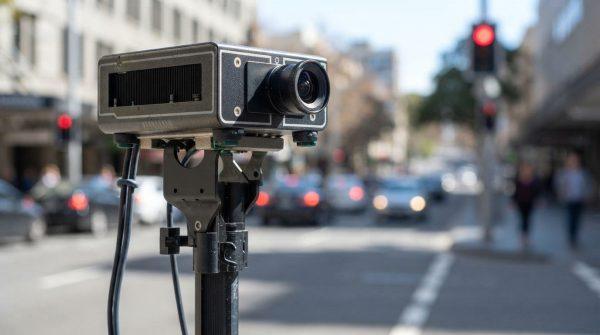
The LAPD isn't stopping at patrol cars. The Board of Police Commissioners has approved a three-month pilot program to test ALPRs mounted on public utility poles. Subcontractor Ubiquia will handle installation, using existing electrical infrastructure to power the devices. These compact units combine plate reading with artificial intelligence that can detect vehicles, pedestrians, and other objects in public view. The trial phase costs the city nothing, but the locations are still listed as "TBA," which has community stakeholders demanding more transparency.
"We need to know which neighborhoods will be the guinea pigs," said Maria Elena Chavez, a community organizer in Boyle Heights. "If these cameras are going to be watching us, we deserve a say in where they go and how the data is used." The LAPD has promised to evaluate the pilot against privacy standards, but critics note that past deployments have not always followed through on such promises.
Data storage and oversight gaps
All the data collected by the ALPRs will be stored in encrypted cloud servers managed through Microsoft Azure Government Cloud. That's a step up from older systems, but it doesn't answer the bigger question: who gets to access that data, and for how long? The Inspector General's audit recommended strengthening data verification protocols, improving records of when and why officers run a plate, and pausing any unauthorized expansion until public accountability is established.
For Latino drivers, the stakes are personal. A minor traffic violation can escalate quickly if an officer relies on a faulty ALPR hit. Language barriers, immigration status, and the stress of a high-stakes encounter all make the margin for error thinner. "We're not against technology," said Ricardo Ortiz, a civil rights attorney in Los Angeles. "We're against technology that operates without oversight and without regard for the people it's supposed to serve."
The LAPD maintains that the system is a tool, not a replacement for judgment. But as the city expands its surveillance footprint, the conversation is shifting from whether these cameras work to whether they work for everyone. The pilot program will be watched closely—not just by city officials, but by every driver who wonders if the next red light might be a camera logging their plate.
For now, the rollout continues. The LAPD is set to deploy the new readers in phases, with community meetings scheduled in the coming months. Whether those meetings will lead to real changes in policy remains to be seen. But one thing is clear: in a city where the car is king, the road is about to get a lot more monitored.