Juneteenth, which marks the end of slavery in the United States, has become a significant cultural and political touchstone in recent years. While President Joe Biden signed it into law as a federal holiday in 2021, the practical reality for workers depends heavily on where they live. In New York, the state has made Juneteenth a paid legal holiday for its employees, aligning with a growing number of states that honor this historic date.
How New York Observes Juneteenth
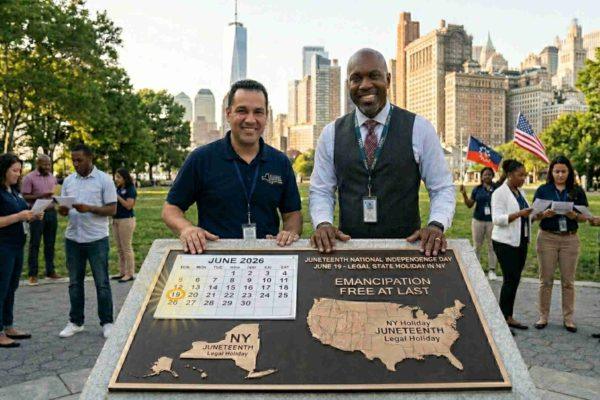
New York officially recognizes Juneteenth as a paid holiday for state workers, meaning government offices close and employees receive a day off with pay. This places the Empire State among 33 states and the District of Columbia that offer such benefits. For Latino communities across New York, this day serves as a moment to reflect on the intertwined histories of African American and Latino struggles for justice and equality, especially given the shared experiences of diaspora and discrimination.
The decision to grant paid leave is not uniform. States like Texas, where Juneteenth originated, have long celebrated it, while others have only recently adopted it. The list of states offering paid time off includes Alabama, Alaska, Colorado, Connecticut, Delaware, Georgia, Idaho, Illinois, Kansas, Kentucky, Louisiana, Maine, Maryland, Massachusetts, Michigan, Minnesota, Missouri, Nebraska, Nevada, New Jersey, New Mexico, New York, Ohio, Oregon, Pennsylvania, Rhode Island, South Dakota, Tennessee, Texas, Utah, Vermont, Virginia, and Washington. In contrast, states such as Arizona, California, Florida, and others do not provide paid leave, though some allow personal leave or designate it as a day of cultural significance.
This patchwork approach highlights how federal recognition does not guarantee uniform implementation. For Latino workers in states without paid Juneteenth, the day may pass without official acknowledgment, underscoring the ongoing disparities in how the nation commemorates its history.
Political Debates and Recent Controversies
The holiday has not been immune to political shifts. Under the Trump administration, both Juneteenth and Martin Luther King Jr. Day were removed from the list of fee-free days at national parks, a move that drew criticism from Democratic lawmakers and civil rights groups. Such actions reflect the broader tensions surrounding how the U.S. addresses its racial past. For Latino audiences, these debates resonate deeply, as many communities have their own histories of marginalization and resistance.
Juneteenth's roots trace back to June 19, 1865, when Union General Gordon Granger arrived in Galveston, Texas, to announce the freedom of enslaved people—two years after the Emancipation Proclamation. For decades, the holiday was primarily observed within Black communities, but the 2020 protests following George Floyd's death propelled it into the national spotlight. New York was among the states that quickly moved to formalize the holiday, a decision that many saw as a step toward acknowledging the country's complex legacy.
For Latino families, Juneteenth offers a chance to draw parallels with their own histories of struggle, from the fight for civil rights to the ongoing battles for fair wages and representation. As the next Juneteenth long weekend approaches, many will use the day to educate younger generations about the interconnectedness of these movements.
A Day of Reflection Across the Americas
While the debate over paid leave continues, Juneteenth remains a day of reflection for many. It serves as a reminder of the long road toward equality, a journey that Latino communities in the U.S. and across the Americas share. From the streets of Los Angeles to the barrios of San Juan, the holiday encourages conversations about identity, justice, and the future.
As more states consider adopting Juneteenth as a paid holiday, the conversation is likely to evolve. For now, New York stands as an example of how a state can honor this pivotal moment in American history, even as the nation grapples with its meaning.