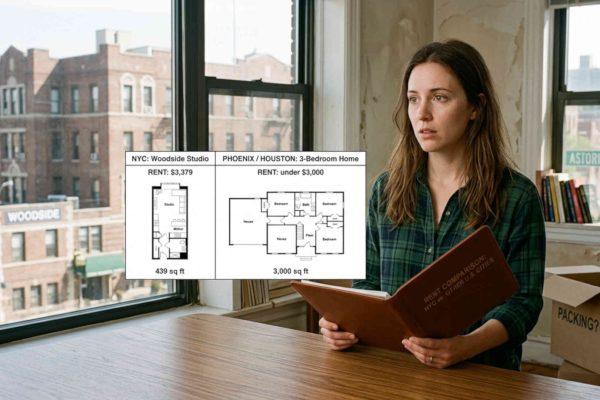
If you're paying rent in New York City, you know the sting of a monthly check that barely covers a closet-sized studio. The latest data puts the average studio at $3,379 per month—a figure that towers over the national average and forces many renters to sacrifice square footage, doormen, and even basic amenities just to stay in competitive neighborhoods like Harlem or Washington Heights. But what if that same money could buy you a home three times the size in another city?
The Space Gap: New York vs. Houston, Phoenix, and Chicago
Across the five boroughs, your rent dollar buys far less than it does in other major U.S. markets. In Houston, the most affordable of the country's five largest cities, a monthly budget of $3,000 can land you a property of up to 3,000 square feet outside the busiest areas. That's a dramatic shift from the cramped quarters of Manhattan or Brooklyn. Phoenix and Chicago are also seeing favorable rental trends, with downward pressure on prices that gives renters more leverage when negotiating leases.
For many Latino professionals, this cost-of-living gap is prompting serious questions about whether the New York hustle is worth the financial strain. As more Latinos leave LA, NYC, and Miami for affordable cities, the appeal of space and savings grows stronger.
Strategies for Staying in New York
If you're not ready to leave the Big Apple, real estate experts suggest looking beyond the core neighborhoods. Areas like Woodside, Sunnyside, and Jackson Heights in Queens offer one-bedroom apartments for around $3,000 per month—still steep, but more manageable than the priciest parts of Manhattan. These enclaves have long been home to Latino communities, from Dominican bodegas to Colombian bakeries, offering cultural familiarity alongside slightly lower rents.
But if quality of life and physical space are your priorities, cities like Phoenix and Chicago are becoming increasingly attractive. Both markets currently show downward rental trends, which means more negotiating power for tenants. In Chicago, neighborhoods like Pilsen and Humboldt Park—historic hubs for Mexican and Puerto Rican communities—offer affordable rents and vibrant cultural scenes. Similarly, Phoenix's growing Latino population has made areas like Maryvale and Central City more accessible for families seeking room to grow.
The Bigger Picture: Affordability and the Latino Exodus
This isn't just about square footage. It's about financial freedom. The rising cost of living in major cities is pushing Latino families to reconsider where they can build a future. By 2028, some cities may become out of reach for households on stagnant incomes. Meanwhile, places like Topeka are emerging as budget-friendly havens for Latino homebuyers fleeing high-cost markets.
Ultimately, the choice comes down to what matters most: being at the center of New York's relentless energy or enjoying the comfort and financial breathing room that other cities offer. For many, the answer is increasingly clear—especially when your rent money can go twice as far.