When Genevieve Beals packed up her Corona apartment 18 months ago, she thought she was leaving behind the worst of California's climate chaos. Twice evacuated because of wildfires, she sought refuge in Long Beach, hoping the sound of the ocean would soothe the anxiety that had followed her from the fire lines. Instead, she now watches saltwater creep toward her front door as king tides and powerful swells batter the peninsula she calls home.
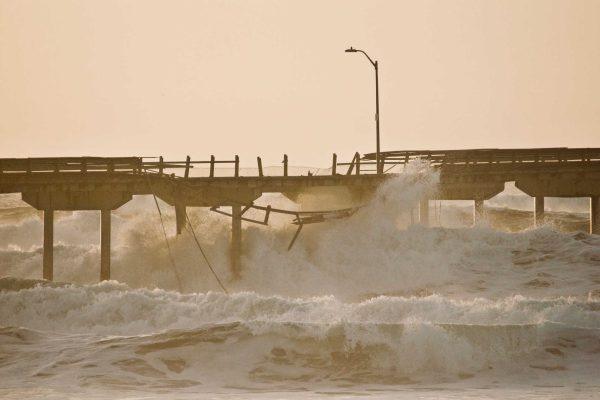
Beals is not alone. Across Southern California's coastline, from Newport Beach to Long Beach, residents are confronting a new reality: the sea is no longer a scenic backdrop but an active threat. Since August, a series of tropical storms have sent destructive swell trains toward the shore, flooding boardwalks and pushing water into streets and homes. The phenomenon, intensified by unusually warm Pacific waters linked to El Niño, has turned what was once a sanctuary into a source of constant stress.
A climate paradox on the coast
For Beals, the irony is painful. She moved to Long Beach to escape the trauma of wildfires, only to find herself facing a different kind of disaster. "I thought the ocean would be calming," she told local media, "but now I watch the waves crash against the boardwalk and wonder if my apartment will be next." The saltwater regularly crosses the street, and during high tides, it laps at the entrance of her rented unit. Massive waves throw foam three stories high, a spectacle that once might have been awe-inspiring but now feels menacing.
Local officials have been warning about this since 2019. They point to the increasing frequency of flooding events, a trend that aligns with global sea-level rise projections. The Aquarium of the Pacific, a research institution in Long Beach, has been blunt: engineering fixes like seawalls or sand replenishment are not sustainable long-term solutions. The only realistic path, they argue, is an orderly retreat from the coast—a concept that is politically and emotionally difficult for many to accept.
Beals' lease is nearing its end, and she faces a dilemma: renew and risk another flood, or move again, this time to a place that might be safe from both fire and water. "I don't know where to go," she admits. "The mountains burn, and the coast floods. It feels like there's no safe place left in California."
Her story resonates beyond her personal struggle. It highlights a broader crisis affecting communities up and down the state. In nearby Huntington Beach, officials recently closed two miles of coast after a white shark sighting, a reminder that the ocean's dangers are not just from waves. And the record El Niño waves forecast for this winter have already prompted warnings about rip currents and coastal erosion.
The situation is not unique to California. Across Latin America, coastal cities like Cartagena, Colombia, and Veracruz, México, are grappling with similar threats from rising seas and stronger storms. But in the United States, the response has been piecemeal. Some communities are investing in temporary barriers, while others are considering managed retreat. The lack of a coordinated national strategy leaves residents like Beals in limbo.
For now, Beals tries to enjoy the sunny days when the street stays dry. She takes walks along the boardwalk, breathing in the salt air, and tries to forget the forecasts. But the next king tide is already on the calendar—late November, the December holidays, late January. Each one brings a new test of her resilience.
Her story is a cautionary tale for anyone who thinks they can outrun climate change. As she puts it, "You can move, but the climate follows you." And for a generation of Latinos who have deep ties to both the land and the sea, the message is clear: the environment is changing, and so must we.
Beals is not alone in her search for stability. Many Californians, especially younger ones, are leaving the state in search of more affordable and safer places. But for those who stay, the challenge is to adapt to a new normal where the ocean is both a treasure and a threat.
As the climate continues to shift, stories like Beals' will become more common. They remind us that the decisions we make today—about where to live, how to build, and how to protect our communities—will shape the future for generations to come. For now, Beals waits, watches the tide, and hopes that the sea will spare her home.