For decades, Hollywood has tried to fit Latino talent into neat boxes. But the reality is far richer: a mosaic of ancestries, languages, and traditions that defy simple labels. Today, a growing number of actors, musicians, and public figures are speaking openly about what it means to carry multiple heritages in an industry that often demands a single story.
These conversations are not just about personal identity—they touch on colorism, gatekeeping, and the pressure to prove one's Latinidad. In their own words, here's how some of the most prominent Latino stars navigate this complex terrain.
When your own community questions you
For many mixed-heritage artists, the scrutiny comes from all sides. Inde Navarette, an actress of Mexican American and Australian descent, moved to California as a teenager and suddenly found her connection to the Latino community under a microscope. She didn't speak Spanish fluently and had lighter skin, which led to constant commentary. Instead of shrinking away, Navarette now advocates for acknowledging the different privileges within the industry while staying proud of her father's heritage and the fans who support her.
Similarly, Daniela Avanzini, a member of the global group KATSEYE, describes living in a cultural middle ground. With Cuban, Venezuelan, and European roots, she says Western society doesn't always see her as white enough, while some in the Latino community don't see her as Latina enough. She embraces that space, feeling a responsibility to represent those who don't fit neatly into any category.
Aubrey Plaza faced doubts about her Puerto Rican and Irish background early on, even when receiving diversity awards in school. Rather than let skeptics dictate her path, she has built a career playing complex Latina characters that break away from narrow stereotypes, opening doors for more authentic representation on screen.
Global icons, multicultural roots
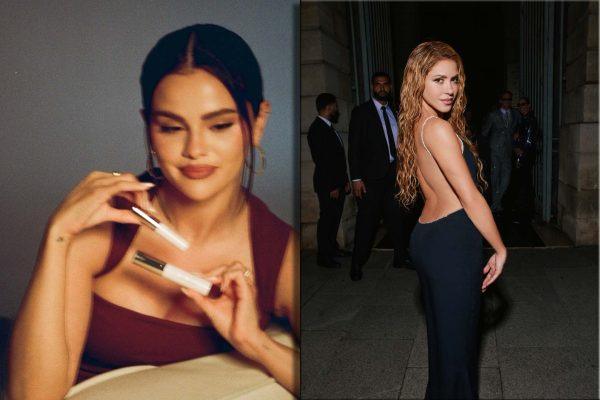
Some of the biggest names in entertainment have turned their mixed heritage into a creative superpower. Shakira, born in Barranquilla, Colombia, describes her identity as a genuine fusion: Spanish, South American folklore, Arabic dance from her Lebanese father, and Western pop and rock. That blend became her signature sound, proving that cultural boundaries are made to be crossed.
Rachel Zegler, the Golden Globe-winning actress, has been candid about the challenges she faced during casting for West Side Story, when executives questioned the authenticity of her mother's Colombian roots. Aware of the privileges that come with being a light-skinned Latina, she uses her platform to push for more inclusive opportunities and rejects attempts to invalidate her background.
Miguel, the R&B singer of African American and Mexican American heritage, recalls how music executives and fans struggled to understand his dual identity. He insists that both sides of his family have shaped his artistry, and he's helped spark important conversations about Afro-Latino visibility in genres often labeled as single-demographic.
Facing the online scrutiny
Social media has amplified the pressure on Latino celebrities to prove their authenticity. Selena Gomez has openly discussed the hurtful comments about not being Latina enough or white enough. She acknowledges the emotional toll but remains committed to representing her Mexican and Italian heritage with pride, using her global reach to talk about the psychological effects of public scrutiny.
Bella Thorne has dealt with similar questions about her Cuban lineage, often because her light hair and hazel eyes don't match people's expectations. She says honoring her father's memory keeps her connected to her roots, and she pleads for empathy, reminding audiences that identity is about more than appearance.
Celebrating both worlds
For some, mixed heritage is a source of joy and strength. Lee Rodriguez, from Never Have I Ever, is grateful to play characters that mirror her own experience as an Afro-Latina of Mexican American and African American descent. She describes her journey as a celebration, enjoying the best of both cultures and serving as a role model for young viewers seeking authentic representation.
Cardi B, of Trinidadian and Dominican heritage, has never shied away from her roots. She proudly represents the Caribbean and Latinx communities, using her music and platform to challenge stereotypes and uplift her culture.
These stories reflect a broader shift in how Latino identity is understood. As more artists speak out, they're not just reshaping their own careers—they're expanding the definition of what it means to be Latino in the public eye. For those who feel caught between worlds, their voices offer a powerful reminder: you don't have to choose one part of yourself.
For more on how identity shapes Latino experiences, check out why some Afro-Latinas feel they must prove their identity on screen and Thalia Gochez's documentary photography.