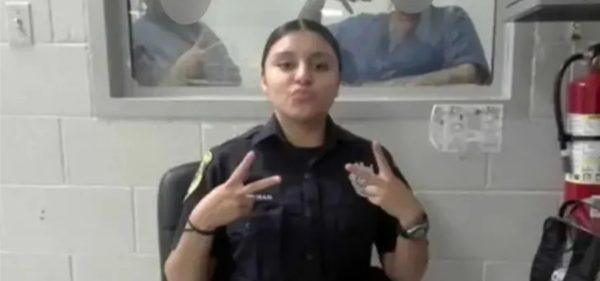
In law enforcement, reputations are built over years but can collapse in a single moment. For Karla Beltran, an 18-year-old detention deputy in San Antonio, that moment arrived in the form of photographs taken inside the Bexar County jail.
Beltran was fired on October 12 after images circulated showing her posing with female inmates inside the detention facility. The photos, which surfaced on social media, showed Beltran in uniform making peace signs and playful faces while inmates stood behind a glass partition. Another image captured her raising both middle fingers toward the camera, with an inmate mimicking the gesture.
The sheriff’s office confirmed that her dismissal fell under its probationary policy. New detention deputies serve a one-year probation period, during which they can be let go for failing to meet professional expectations. Beltran had joined the department on July 1, meaning her tenure lasted barely three months.
A costly lapse in judgment
While the photos may have seemed harmless in the moment, they crossed a clear professional boundary. Law enforcement agencies across the country have strict rules about conduct on duty, and social media posts that undermine the seriousness of the job often lead to discipline. In this case, the images reached the wrong audience—likely through other inmates or staff—and quickly made their way to supervisors.
Authorities have not publicly identified who took the photographs or the exact circumstances. As of October 14, no criminal charges were pending, and the department was still investigating the details. The sheriff’s office has not commented further on the case.
This incident echoes a broader trend in Texas and beyond, where officers and deputies have faced consequences for inappropriate social media activity. In recent years, several law enforcement personnel have been fired or suspended for posting content that conflicts with their professional roles. The Bexar County case is a reminder that the line between personal expression and professional conduct is often thin—and that crossing it can have lasting repercussions.
For Beltran, the dismissal is a harsh introduction to the realities of a career in public service. She is young, and the mistake may not define her future, but it has already cost her a job she had only recently started. The incident also raises questions about the training and oversight of new deputies, especially those who are barely out of their teens.
As the investigation continues, the Bexar County Sheriff’s Office is likely to review its policies on social media use among staff. For now, the case serves as a cautionary tale for anyone in uniform: the camera never forgets, and neither do employers.