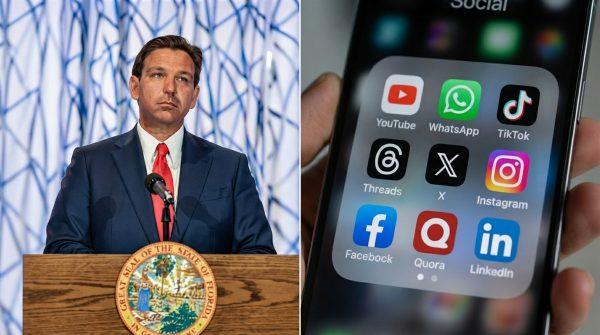
Florida has taken a significant step in modernizing how it defines and prosecutes gang-related activity, with Governor Ron DeSantis signing CS/HB 429 into law on June 16, 2026. The legislation, which becomes effective October 1, 2026, updates the state's criminal gang statutes to include digital communications—meaning what you post on Facebook, Instagram, TikTok, or X could now be used as evidence in gang investigations.
For residents in Miami, Orlando, and Tampa, where social media is woven into daily life, the new law raises important questions about free expression and privacy. But legal experts are quick to clarify: a single post, even one with questionable language, won't automatically land you in legal trouble. The law requires at least two corroborating indicators before someone can be formally classified as a gang member.
What the Law Changes
Under the revised Section 874.03 of the Florida Statutes, prosecutors can now consider electronic communications—including posts, messages, and even coded language—as part of the evidence used to establish gang affiliation. This expands the traditional list of indicators, which already included tattoos, hand signs, and specific clothing, to encompass the digital footprint that many of us leave behind.
But the law is careful not to criminalize everyday speech. As the Florida Office of the Attorney General clarifies, gang-associated language must be a verbal or written statement that explicitly indicates affiliation with a criminal organization. Casual comments, jokes, or even references to popular culture—like a lyric from a reggaeton song—won't meet the threshold unless they are clearly tied to furthering criminal activity.
“This is about context,” says María Fernanda López, a criminal defense attorney in Miami who has been following the legislation. “A photo of someone throwing a hand sign at a party, or a post that uses slang common in their neighborhood, isn't enough. The state has to show a pattern of behavior that goes beyond a single moment.”
Multifactor Evaluation: More Than Just Posts
The law establishes a multifactor test, requiring at least two distinct criteria from a list that includes documented tattoos, hand signs, specialized attire, statements from reliable informants, family members, or self-identification. It also lowers the threshold for physical contact with known gang members from four to two verified occasions, though this only applies when the contact is voluntary—especially important in detention settings.
This shift reflects a broader trend in law enforcement: recognizing that criminal organizations increasingly communicate online. But it also raises concerns about potential overreach, particularly in communities where certain phrases or symbols might be misinterpreted. Community leaders in Little Havana and East Orlando have voiced worries that the law could unfairly target young people who adopt certain styles or slang without any real gang involvement.
“We're telling our kids to be careful, but also to know their rights,” says Carlos Rivera, a youth counselor in Tampa. “They need to understand that a post can be taken out of context, but they also shouldn't be afraid to express themselves.”
What This Means for Your Digital Footprint
For everyday Floridians, the takeaway is to be more mindful of your online presence. While the law doesn't require you to scrub your social media, it does mean that your posts could be scrutinized if you're ever under investigation. Legal experts recommend reviewing your privacy settings, being cautious about who you associate with online, and avoiding any language that could be seen as promoting illegal activity.
Local organizations are stepping up to help. In Miami-Dade, workshops are being held to educate residents on the new law and how to navigate it. Similar efforts are underway in Orlando, where community groups are partnering with attorneys to provide clear guidelines.
This law is part of a broader conversation about how technology intersects with public safety. As Florida tightens rules on other fronts, residents are learning to adapt. And while the state watches hurricane season and enjoys the boom in the Keys, this new law serves as a reminder that our digital actions have real-world consequences.
As the October 1 implementation date approaches, it's wise to stay informed. The law may be new, but the principle is old: think before you post. Your digital footprint is permanent, and now, it could also be evidence.