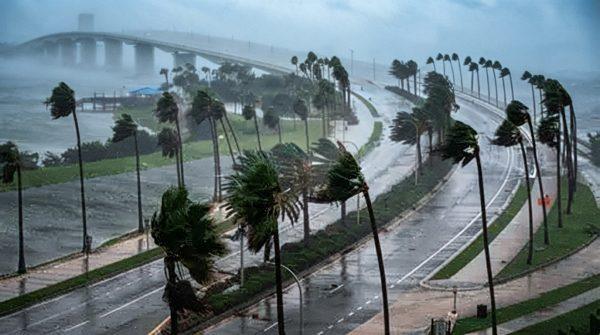
As the Atlantic hurricane season barrels forward, Florida is once again on alert. The National Hurricane Center is closely watching Invest 96L, a tropical disturbance currently churning over open waters hundreds of miles south-southeast of the Cape Verde islands. With a 70% chance of developing into a named storm within the next 48 hours, forecasters are urging residents across the southeastern coast to stay informed and prepared.
Invest 96L is moving westward-northwestward at a steady clip, and atmospheric conditions appear favorable for gradual organization. While it's still too early to predict an exact path, the system could potentially strengthen into a hurricane as it approaches the Caribbean next week. That uncertainty is enough for emergency management agencies in Florida to start reviewing contingency protocols.
What forecasters are watching
Meteorologists are also tracking a second system, Invest 95L, positioned east-northeast of Bermuda. That disturbance is moving north-northwestward at 15 to 20 mph, with a broad circulation and a 40% chance of cyclonic development. However, analysts note that early-stage systems like these often encounter unfavorable conditions—such as dry air or wind shear—that can limit their longevity.
Hurricane specialist Bryan Norcross points out that several computer models suggest Invest 96L could survive encounters with Saharan dust and upper-level winds, potentially undergoing significant intensification as it moves northward through the Caribbean. That scenario would put the Gulf of Mexico and the U.S. Southeast squarely in the crosshairs.
For Florida's diverse communities, including the state's large Latino population, staying prepared is a shared responsibility. Local officials are broadcasting bilingual educational campaigns to ensure everyone—from Miami's Cuban American neighborhoods to Tampa's Puerto Rican enclaves—receives clear, actionable information.
Preparedness and community resilience
Emergency coordination teams across coastal counties are reviewing evacuation routes and shelter capacities. Utility operators are inspecting drainage systems and backup power generators to mitigate flooding risks. Public safety officials are urging residents to secure outdoor property and to rely on verified sources for updates, avoiding the rumor mill that often swirls during storm season.
Florida has been here before, and the state's infrastructure is getting a climate-resilient makeover to better withstand the punch of future storms. But resilience also depends on individual action. Knowing your zone and having a plan can make all the difference—especially for those who may be new to hurricane preparedness.
Satellite platforms are capturing high-resolution imagery of cloud-top temperatures and rotational velocity, while reconnaissance aircraft are gathering in-situ barometric pressure data to validate computer models. These tools help forecasters refine their predictions and give communities more lead time to act.
As the system evolves, long-term models suggest that warm ocean temperatures could drive rapid intensification. That's why the National Hurricane Center and local emergency offices are maintaining seamless data sharing, keeping radars engaged and eyes on the horizon.
For now, the message is clear: stay alert, stay informed, and don't wait until the last minute. The Atlantic doesn't rest, and neither should we.