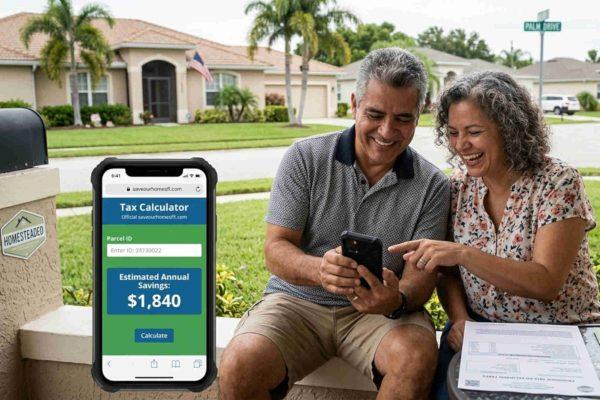
Florida has rolled out a digital tool that lets homeowners get a clearer picture of what their property taxes could look like if a major exemption proposal becomes law. The calculator, available at saveourhomesfl.com, was promoted by Governor Ron DeSantis and allows owners of primary residences to enter their address or parcel ID to see three scenarios: their current estimated tax bill, what it would be under an expanded exemption of up to $250,000, and the annual savings they could expect.
While the site makes clear that the numbers are illustrative and not an official bill, the tool gives Floridians a practical way to understand how this change might affect their household budgets before they head to the polls. For Latino homeowners across the state—from Miami to Tampa to Orlando—this could mean significant relief in a state where the cost of living has been squeezing families.
The Legislative Hurdle and the Debate Over Public Services
The proposal isn't a done deal. It needs to clear two high bars: approval from 60% of the Florida Legislature and the same level of support from voters in the November election. That double threshold has sparked intense discussion about how local governments spend money. Governor DeSantis argues that the reform would push municipalities to manage taxpayer dollars more efficiently, but critics warn that cutting property tax revenue could hurt essential services like schools, fire departments, and infrastructure maintenance.
Opponents point out that raising the exemption from $50,000 to $250,000 could create significant gaps in municipal budgets. Local governments might then look for new fees on infrastructure usage to make up the difference, which could offset some of the savings homeowners see on their tax bills. For communities with large Latino populations—like Hialeah, Doral, or Kissimmee—the impact on public schools and emergency services is a particularly sensitive issue.
Transparency and Participation in Tax Reform
To use the calculator, homeowners must confirm they have a homestead exemption on their property. The tool then generates a side-by-side comparison that makes it easier to weigh the potential benefits against the possible trade-offs. The “Save Our Homes” campaign, backed by a state investment of over $5 million, frames this as a way to return decision-making power to voters and limit special interests' access to public funds.
For many Latino families who have built their lives and businesses in Florida, understanding how tax policy affects their bottom line is crucial. Whether you're a first-generation homeowner in Englewood or a longtime resident in Miami-Dade, this calculator offers a starting point for informed conversations about the future of your community.
Ultimately, the tool is a practical resource for measuring how much extra money could stay in your pocket—and for evaluating what that might mean for the quality of public services in your neighborhood. As the November vote approaches, homeowners across Florida will have to decide whether the potential savings are worth the risks critics have outlined.