Across Florida, the sharp rise in living costs has become the central concern for thousands of households, particularly within the Latino community. Families are rethinking how they spend, save, and plan for the future as inflation tightens its grip on everyday essentials.
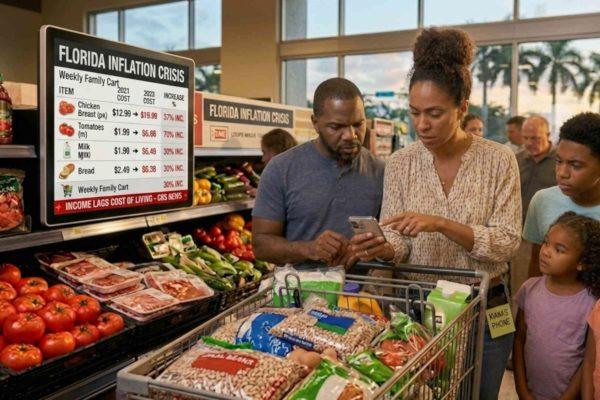
Grocery bills have become a flashpoint. Fresh tomatoes now cost nearly 40% more than they did last year, while ground beef has jumped over 14%. Seafood prices have climbed about 6%, forcing many home cooks to swap traditional ingredients for more affordable alternatives. The old habit of buying in bulk without checking prices has all but disappeared. Instead, shoppers are hunting for daily deals, downloading digital coupons, and visiting multiple stores to stretch every dollar.
Fuel costs add another layer of pressure. Diesel and gasoline have rebounded by 21%, directly raising the price of transporting food and other goods to supermarket shelves. Economists at major Florida universities point to global energy volatility as a key driver, noting that the cost of moving supplies now hits consumers at the register almost immediately.
Latino Families Turn to Community and Tech
For the large Latino population in Florida, this economic strain is especially acute. Many rely on family solidarity and organized groups on social media to share effective saving tips. WhatsApp chains and Facebook groups buzz with advice on where to find the best deals on staples like rice, beans, and cooking oil. The sense of collective resourcefulness is strong, but the underlying anxiety is real.
Recent polls confirm that three out of four Floridians feel their wages have not kept pace with inflation. This disconnect has sparked interest in financial education programs, with community centers and online platforms offering workshops on budgeting and long-term wealth protection. As one Miami-based financial coach put it, “The rules have changed. Families need to be more strategic than ever.”
Digital tools are replacing old paper coupons. Mobile apps that aggregate discounts and loyalty rewards have become essential for many households. Yet even with these aids, the challenge remains steep. The cost of living surge in Florida is not just a statistic—it is reshaping how families plan their domestic economy to make ends meet.
For Latino buyers, the housing market adds another layer of complexity. As noted in our coverage of overvalued homes in Texas, Florida, and California, rising prices and interest rates are making homeownership harder to achieve. Meanwhile, the broader economic uncertainty has led many to reconsider major purchases and focus on building emergency savings.
The energy crisis, tied to international geopolitical tensions, shows no sign of easing. Analysts warn that fuel prices will remain a leading indicator for future grocery hikes. For now, Florida families are adapting—substituting ingredients, carpooling to save on gas, and leaning on community networks. Survival strategies have become the new normal.
As the situation evolves, the need for rigorous financial education grows. Organizations across the state are stepping up, offering resources in Spanish and English to help families navigate these turbulent times. The resilience of the Latino community, built on generations of resourcefulness, is being tested—but it is also being strengthened.