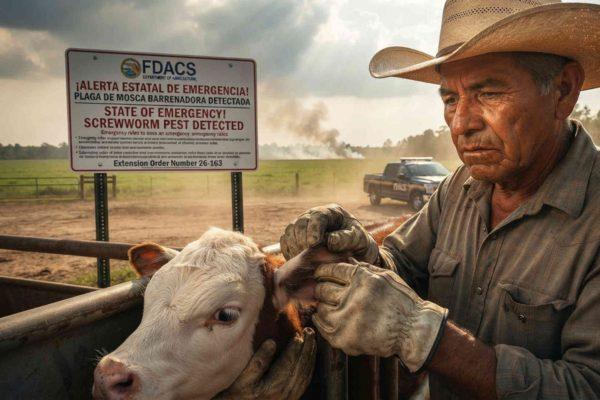
Florida is facing a quiet but dangerous threat: the screwworm, a parasitic fly whose larvae can devastate livestock and wildlife. Governor Ron DeSantis has signed Executive Order 26-163, extending the statewide emergency for another 60 days across all 67 counties. The move is meant to stop the spread of this pest while also tackling the fallout from months of drought, severe frost, and a rising number of wildfires that have hit rural communities hard.
The screwworm is not a new problem for the Americas, but its recent detection in southern Texas and New Mexico has put Florida on high alert. The state's agriculture department has confirmed the presence of the pest in those regions, prompting Florida to tighten border controls. Now, any warm-blooded animal coming from an infested area must have special permits and health certificates before entering the state. These measures are designed to reduce the risk of the screwworm reaching Florida's cattle ranches, where an outbreak could be catastrophic.
Why the screwworm is so dangerous
The screwworm gets its name from the way its larvae burrow into the flesh of living animals. A single fly can lay hundreds of eggs in a minor wound, and within days the larvae begin feeding on the host, causing severe damage and often death if untreated. For ranchers, this means daily inspections of their herds and immediate treatment of any scratch or cut. The economic stakes are enormous: an uncontrolled outbreak could cost the state millions in livestock losses and trade restrictions.
Florida's response has been coordinated with federal agencies, including the U.S. Department of Agriculture. The state has also ramped up surveillance and is working with local veterinarians to catch any signs of the pest early. But the emergency order is not just about the screwworm. It also covers the broader agricultural crisis caused by extreme weather. The drought has dried up pastures, frost has damaged crops, and wildfires have scorched thousands of acres, putting additional pressure on farmers and ranchers who are already struggling.
A heavy toll on Latino workers and rural communities
The people most affected by this emergency are the farmworkers and ranchers who keep Florida's agricultural sector running. Many of them are part of the Latino community, which has deep roots in the state's cattle industry. From the cattle drives of Central Florida to the dairy farms in the south, Latino workers are essential to daily operations, from feeding and herding to veterinary care. The added burden of screwworm checks and stricter regulations means more hours and more stress for these workers, who are already dealing with the fallout from the weather.
For many, this is a familiar story. Agriculture has always been a tough business, but the combination of pests, climate extremes, and now the threat of a screwworm outbreak is pushing some to the brink. As one rancher in Okeechobee put it, "We're used to challenges, but this one feels different. We're watching every wound, every animal, every day."
The state's response has been to double down on prevention. The emergency order allows for faster deployment of resources, including additional inspectors and support for local agencies. But the real work happens on the ground, where ranchers and workers are the first line of defense. Their vigilance is what will ultimately determine whether Florida can keep the screwworm at bay.
This is not just a Florida issue. The screwworm has been a recurring problem across Latin America, and countries like Mexico and Guatemala have spent decades fighting it. The lessons learned there are now being applied here, with a focus on sterile insect releases and strict animal movement controls. It's a reminder that agricultural threats don't respect borders, and neither do the solutions.
For now, the emergency order gives Florida the tools it needs to respond. But the longer-term challenge is building a more resilient agricultural system that can withstand both pests and climate shocks. That means investing in research, supporting farmworkers, and ensuring that the people who feed us are protected too.
As the state moves forward, the focus remains on eradicating the screwworm before it gains a foothold. The next 60 days will be critical. For the ranchers, the workers, and the communities that depend on them, the hope is that this emergency will end with the pest gone and the farms intact.