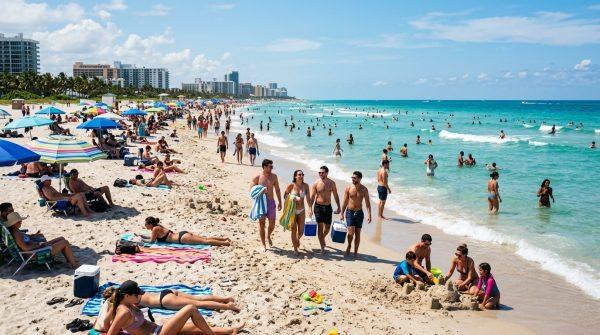
Florida health officials have confirmed cases of Vibrio vulnificus, the bacteria often called flesh-eating, in several beach resorts across the state this summer. The news comes as coastal temperatures rise, creating ideal conditions for the microorganism to multiply in brackish water. For Latino families planning trips to Florida beaches—from Miami to Tampa—understanding how to stay safe is essential.
How the Bacteria Spreads
Vibrio vulnificus naturally lives in warm saltwater and enters the human body through open cuts, scrapes, or piercings. Once inside, it can cause severe skin infections that progress rapidly. The Centers for Disease Control and Prevention (CDC) warn that direct contact between a wound and contaminated seawater is the most common route of infection. This is especially relevant for beachgoers who may have fresh tattoos, recent surgeries, or even small scratches from seashells.
Another major risk comes from eating raw or undercooked seafood, particularly oysters. The bacteria can reach the digestive tract and cause severe stomach issues, including diarrhea, vomiting, and fever. Improperly prepared shellfish are a known source of infection, so consumers should be cautious when ordering seafood at coastal restaurants or buying from markets.
People with weakened immune systems, chronic illnesses like diabetes, or liver disease face a much higher risk of complications. The infection can escalate quickly, leading to tissue damage or sepsis if not treated promptly. That’s why health experts stress the importance of immediate medical attention if symptoms appear.
Prevention Tips for the Beach
Public health agencies recommend avoiding saltwater if you have any open wounds, including cuts, scrapes, or fresh tattoos. The healing process makes skin especially vulnerable to marine bacteria. Before heading into the ocean, check your skin for any breaks and cover them with waterproof bandages. If you do get a cut while at the beach, wash it immediately with soap and clean water to remove sand and marine residue.
For those who enjoy seafood, it’s best to avoid raw oysters and undercooked shellfish during the hottest months. Commercial establishments and coastal restaurants are stepping up inspections, but consumers should also ask about how their food is prepared. Cooking seafood thoroughly kills the bacteria, so ordering grilled or fried options reduces risk.
These precautions are especially important for Latino communities, who often have strong traditions of beach outings and seafood consumption during summer. In states like Florida, where many Latino families live or vacation, awareness can make a difference. For more on how other coastal areas are handling similar issues, check out our report on New Jersey beaches under bacteria alert.
Warning Signs and When to Seek Help
Knowing the symptoms can save lives. For wound infections, look for intense redness, disproportionate pain, swelling, heat, and blisters or ulcers around the injury. For stomach infections after eating seafood, watch for diarrhea, vomiting, abdominal pain, and fever. If any of these appear, especially after exposure to seawater or raw shellfish, go to a hospital immediately.
Doctors can treat Vibrio vulnificus with antibiotics, but early intervention is critical. The National Institutes of Health emphasize that prompt diagnosis can prevent limb amputation or death. As summer heats up, staying informed is your best defense.
For more summer safety tips, see our guide on how Latino communities can stay safe during heat waves and learn about rising Powassan virus cases that also affect outdoor activities.