For many Latinos, faith has never been a single, tidy package. You might light a candle to Saint Lazarus in the morning, check your horoscope on the subway, and still say a rosary before bed. The question isn't always whether you've left the church—it's whether the church ever fully made room for the way you believe.
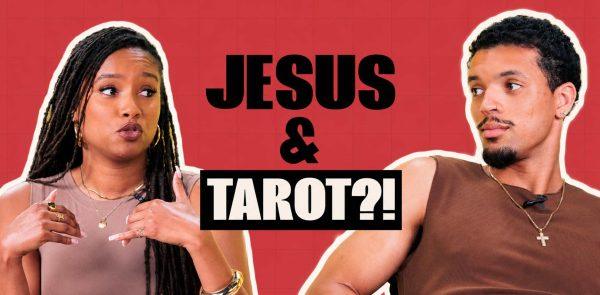
That tension is at the heart of a recent episode of Say It Black!, where hosts Julian Laro, Jovy E., Shaylen Nelson, and Ifeoma Bosah sat down to compare the spiritual traditions they inherited with the ones they've chosen for themselves. The conversation quickly moved beyond simple labels like "religious" or "spiritual" into something more nuanced: how do you hold onto God while also reading your birth chart?
When faith becomes personal
For some, the answer is clear. If prayer already provides direction, why look elsewhere? Tarot cards, astrology apps, and ancestral rituals aren't harmless extras—they're doors that don't need to be opened. But for others, those practices are tools for self-reflection, not replacements for faith. As one host put it, you can believe in God and still wonder if Mercury retrograde is why your week fell apart—though they joked about blaming "Pluto in Gatorade" for every bad day.
The conversation deepened when the group turned to history. Colonialism didn't just conquer land; it also demonized Indigenous and African spiritual practices across the Americas. In México, Guatemala, and Peru, ceremonies honoring ancestors were labeled witchcraft. In the Caribbean, Santería and Vodou were pushed underground. Reconnecting with those traditions doesn't have to mean rejecting Christianity—for many, it's about asking what was lost when Western religion became the only acceptable way to believe.
That resonates strongly in Latino communities, where Catholicism often coexists with curanderismo, espiritismo, and other folk practices. A Mexican American might attend Mass on Sunday and visit a sobador for a sprained ankle on Monday. A Puerto Rican might pray to the Virgin and also consult a santero for guidance. These aren't contradictions—they're layers of a complex spiritual inheritance.
But everyone has a limit. Tarot might be negotiable, but Ouija boards, mysterious Latin chants, and inviting unknown spirits into the house? That's where the hosts drew the line. The humor in that moment underscored a real point: spirituality is deeply personal, and even the most open-minded among us have boundaries.
The episode also touched on how younger generations are redefining faith on their own terms. Instead of choosing between God and the stars, they're building hybrid practices that honor both. This isn't about abandoning religion—it's about expanding what faith can look like.
For those navigating this balance, the takeaway is simple: there's no one right way to believe. Whether you find meaning in a church pew, a meditation cushion, or a birth chart, the goal is the same—to feel connected to something bigger than yourself.
Watch the full episode of Say It Black! to hear the complete conversation. And if you're curious about how faith and identity intersect in other contexts, check out our piece on Pope Leo XIV's health and its implications or explore how genetics play a role in health—another area where tradition and science often clash.