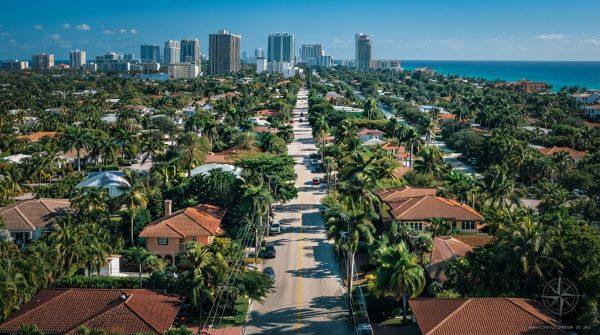
Something unusual is happening along California's coast. A powerful El Niño has pushed warm ocean currents northward, turning Southern California beaches into a temporary home for tropical marine life. From venomous sea snakes to whale sharks, the region is seeing species that typically stay far to the south.
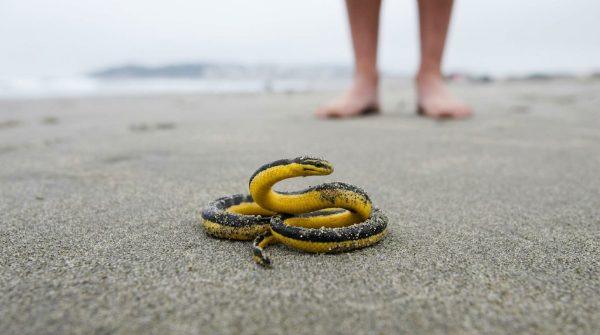
On the night of September 11, Jackie Aguilar was walking with her family at Crystal Cove State Park in Orange County when she spotted a weak, disoriented creature washed ashore. Using a palm frond, she gently lifted it back into the water, capturing the moment on video. That creature turned out to be a yellow-bellied sea snake (Hydrophis platurus), a species whose venom can cause paralysis and even death. The video quickly went viral, drawing attention to a broader ecological shift.
William Ludt, associate curator of ichthyology at the Natural History Museum of Los Angeles County, confirmed this was only the sixth or seventh verified sighting of the species in California history. Previous sightings occurred in January and November 2018, also in Orange County. The appearance of these tropical snakes is a clear sign of how ocean warming is altering local habitats.
More tropical visitors, more caution
Marine naturalist Chad Steffen noted that sea snakes are clumsy on land, but experts strongly discourage handling them due to their potent venom. The warning comes as other exotic species appear along the coast. In August, a hammerhead shark was filmed swimming less than a mile off Laguna Beach. Commercial pilot Carl Sbarounis, with 40 years of experience, photographed a juvenile whale shark between Santa Barbara Island and Malibu, estimating it at 14 to 16 feet long. He had previously seen similar specimens near Catalina and San Clemente islands.
Sea turtles are also making history. NOAA officials recorded the first-ever West Coast turtle nests, with olive ridley turtles laying eggs on Seal Beach on September 16 and Huntington Beach three days later. Anglers have caught longfin bigeye at Venice Pier, along with flying fish, manta rays, and mahi-mahi in regional waters.
Greg Pauly, a reptile specialist at the Natural History Museum, pointed out that five of the six documented yellow-bellied sea snake sightings in California coincided with major climate events. This El Niño is no exception.
Economic boom, ecological strain
The warm waters have brought a surge in sportfishing. Donna Kalez, co-owner of Dana Wharf Sportfishing & Whale Watching, reported that anglers landed 5,000 yellowfin tuna in 2026, compared to just two fish during the entire previous year. The excitement is palpable, but there's a cost.
Nate Jaros, vice president of animal care at the Aquarium of the Pacific in Long Beach, acknowledged the thrill of these unusual times, but Chris Lowe, director of the Shark Lab at California State University, Long Beach, explained that while mobile predators can relocate easily, stationary organisms like kelp face extreme stress. The same warm water that brings tropical fish suppresses cold-water upwelling, devastating kelp forests that provide habitat for countless species.
The situation has also prompted a state of emergency due to coastal erosion from strong swells and rising sea levels caused by Pacific hurricanes. The California Governor's Office of Emergency Services is working to protect vulnerable communities.
For now, the beaches of Southern California offer a rare glimpse into a changing ocean. But as scientists and locals alike watch, the long-term impacts on the region's marine life remain uncertain. For more on how climate events are affecting the coast, see one woman's climate ordeal and recent shark sightings.