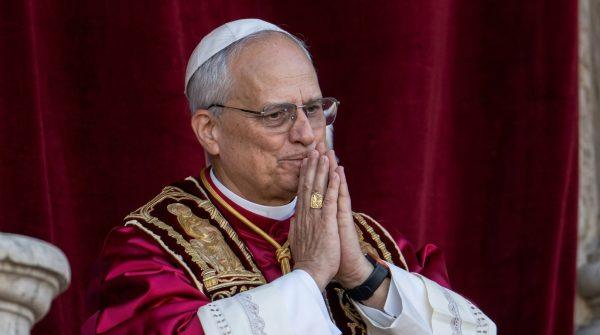
The news hit like a thunderclap across the Catholic world: Pope Leo XIV, the first American-born pontiff, had been diagnosed with lung cancer. The announcement, made after an emergency surgery at Rome's Agostino Gemelli University Hospital on October 13, immediately ignited a firestorm of speculation. For many, the question was unavoidable: did the Pope smoke?
The Vatican was quick to respond. In an official statement, the Holy See confirmed that the 71-year-old pontiff, born Robert Prevost in Chicago, has zero history of smoking. His life, they emphasized, has been marked by athleticism and missionary work in Peru, far from the habits that typically lead to lung cancer. Yet the diagnosis of adenocarcinoma—the most common form of lung cancer in non-smokers—has left many puzzled, and some skeptical.
A medical mystery, or a simple biological reality?
Medical experts from Harvard Medical School and the Cleveland Clinic have stepped forward to clarify that lung cancer in non-smokers is not as rare as many believe. Between 10% and 20% of all lung cancer cases worldwide occur in people who have never lit a cigarette. Adenocarcinoma, the specific type affecting the Pope, is actually the most frequent lung cancer among non-smokers. It develops in the glandular cells that produce mucus, and its causes can range from genetic mutations to environmental factors like radon gas or urban pollution.
Dr. Elena Martínez, an oncologist at a leading cancer center in Bogotá, explains: "We see this all the time. Patients who have never smoked, who lead healthy lives, still get lung cancer. It's a misconception that only smokers are at risk." Her words echo the findings of the American Cancer Society and the Centers for Disease Control and Prevention, which have long documented the phenomenon.
For Pope Leo, the diagnosis has not slowed him down. Despite undergoing a 90-minute surgical procedure to remove the lower lobe of his right lung, the pontiff is reportedly recovering well. He has already resumed his international agenda, including a planned 11-day tour of Uruguay, Argentina, and Peru starting November 6, 2026. The Vatican has canceled all audiences through October 20 to ensure a stable recovery, but the Pope's determination to continue his mission is clear.
A life of service, not smoke
Born on September 14, 1955, in Chicago, Robert Prevost grew up in a family of French-Italian and Spanish heritage. His father, Louis Marius Prevost, and his mother, Mildred Martínez, raised him alongside his two brothers, Louis Martín and John Joseph. His path to the papacy was unconventional: he joined the Order of Saint Augustine and spent years as a missionary in Peru, where he developed a deep connection to Latin America. That connection is now reflected in his upcoming tour, which will take him to some of the very places where he once served.
The Pope's health has been a topic of concern before, but this is his most serious medical challenge yet. The surgery at Gemelli Hospital, which lasted about three hours in total, was performed using a video-assisted technique that allowed for a radical resection of the nodule. The Pope woke up normally and was moved to his room on the 10th floor of the hospital, where he remains under close observation.
Oncologists at Gemelli emphasize that the prognosis will depend on the tumor's stage and the presence of specific genetic mutations. Targeted therapies, such as enzyme inhibitors, have shown promise in treating adenocarcinoma, and the medical team is optimistic. "The Pope is in good hands," said one Vatican source. "He is strong, and he is determined."
As the world watches, the debate over the Pope's past habits seems to be fading, replaced by a broader conversation about lung cancer in non-smokers. For Latinos, many of whom have family members affected by this disease, the Pope's story resonates deeply. It is a reminder that health is never a given, and that even the most unexpected figures can face the same battles as the rest of us.
In the meantime, the Pope's schedule remains full. His upcoming tour of South America is a testament to his commitment to the region, and to his belief that the Church must be present in the lives of the faithful, even in times of personal trial. As he prepares to travel, the faithful are praying for his recovery, and for the wisdom to understand that sometimes, the answers to our questions are not as simple as we would like.
For those following the story, the Pope's resilience is an inspiration. It also raises important questions about how we view health, aging, and the unexpected turns of life. As one observer put it, "If the Pope can face this with grace, so can we."