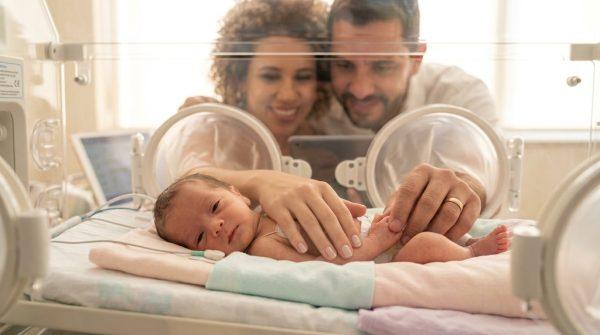
For nearly two weeks, Dorian and Tiffany Ojemen could only reach through the small portholes of an acrylic incubator to stroke the tiny hands of their twins, Silas and Simone, born at just 26 weeks. The constant beeping of monitors and the maze of tubes made any physical closeness feel impossible. Then a Houston hospital introduced them to the Skincubator, a wearable harness that lets parents hold their micro-preemies securely without disconnecting life-support equipment.
Children's Memorial Hermann Hospital in Houston has integrated this innovative device into daily neonatal care. The harness holds breathing tubes, IV lines, and monitoring wires in place while a parent cradles the baby upright against their chest. This allows for essential skin-to-skin contact, also known as kangaroo care, which is crucial for the development of premature infants.
How the Skincubator works and its clinical benefits
The hospital conducted 54 paired sessions with the harness, enabling parents to maintain skin-to-skin contact for extended periods. In a clinical trial involving 19 premature infants between 24 and 33 weeks of gestation, the device proved its worth: infants experienced only a 0.2°C temperature drop during transfers, compared to 0.4°C with traditional methods. More importantly, zero infants suffered moderate hypothermia while using the Skincubator, whereas eight infants did during conventional skin-to-skin contact.
This thermal stability is a game-changer. Traditionally, moving a fragile baby from an incubator to a parent's arms risks a dangerous drop in body temperature. The Skincubator uses conductive thermal reflection to maintain warmth, giving parents and medical staff peace of mind.
Dr. Jaclyn Ruggiero, a neonatologist at the hospital, emphasizes the importance of the first seven days of life for parental contact. She notes that once parents see how the device locks all connections securely, their anxiety eases, and they are eager to try it.
A family's story: bonding against the odds
Dorian Ojemen became the first father in Texas to use the harness. He recalls his initial fear: “I was very nervous because they are so small and I was afraid to do skin-to-skin because I didn’t know how vulnerable they would be… I think it makes the unnatural part of this feel natural again.”
Tiffany, an obstetrician-gynecologist, understood the science behind the device. She extended her kangaroo care sessions well beyond the typical 30 minutes, finding that the direct contact deepened her emotional connection with her twins. “It’s a profound experience,” she said, “to finally hold your babies and feel their warmth against your chest.”
From Jerusalem to Houston: a global innovation
The Skincubator was developed by Skincubator Neocare, a Jerusalem-based company founded in 2022 by neonatologist Itamar Nitzan. His research on premature infant cardiac function led to this breakthrough. In January 2026, the U.S. Food and Drug Administration (FDA) granted the device a Breakthrough Device Designation, which accelerates its review and approval process. This designation is reserved for technologies that offer significant advantages over existing treatments for life-threatening conditions.
The device aligns with World Health Organization (WHO) recommendations to expand daily skin-to-skin contact to up to eight hours for premature babies. Hospitals across the globe are taking notice, and the Skincubator is already being used in clinical settings beyond Texas.
For Latino families, who often face higher rates of premature birth, this technology offers hope. In the U.S., preterm birth rates are disproportionately higher among Black and Hispanic communities, making innovations like the Skincubator particularly relevant. As more hospitals adopt this technology, parents from all backgrounds will have the chance to bond with their babies in those critical early days.
The Skincubator is more than a medical device; it’s a bridge between technology and human connection. It allows parents to be parents, even in the most clinical of settings. As the Ojemen family can attest, that makes all the difference.