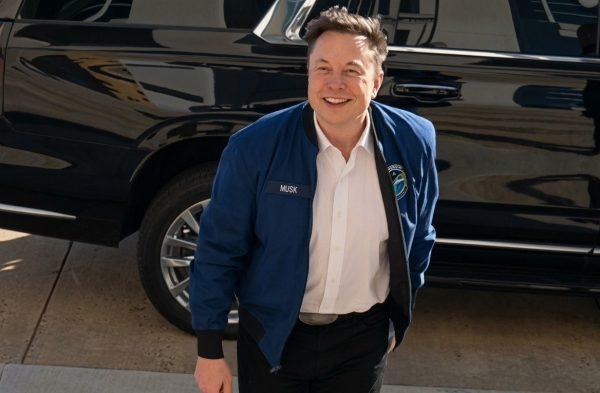
When a single person's wealth outweighs the entire economic output of a nation like Argentina, the conversation shifts from personal success to systemic power. Elon Musk's net worth, now estimated at over $684 billion, has surpassed Argentina's gross domestic product of $638 billion, reigniting a long-simmering debate about the influence of billionaires in a world where traditional state sovereignty is increasingly challenged.
The Rise of Technofeudalism
This isn't just about one man's bank account. It's about a broader trend that political analyst María Migliore calls 'technofeudalism'—a system where a handful of tech billionaires control the platforms, data, and infrastructure that entire societies depend on. According to Migliore, 75% of global wealth is held by the richest 10%, creating a structure where citizens and states alike rely on privately owned digital ecosystems for communication, commerce, and even governance.
Musk's empire—spanning electric vehicles, space exploration, satellite internet, and artificial intelligence—is the most extreme example. But he's not alone. Jeff Bezos owns The Washington Post and Amazon Web Services, which powers much of the internet. Mark Zuckerberg's Meta controls Facebook, Instagram, and WhatsApp, the primary communication tools for millions across Latin America. The question is no longer whether these individuals have influence, but whether any democratic institution can effectively check it.
Politics and the Megaphone
The intersection of wealth and politics has become increasingly visible. In the United States, one out of every six dollars spent on election campaigns comes from just one hundred families. By 2025, tech leaders were occupying privileged positions at official events, often outranking career diplomats and civil servants. This proximity to power isn't just symbolic—it translates into policy influence that can shape everything from tax codes to antitrust enforcement.
Control over media amplifies this power. Musk's acquisition of X (formerly Twitter) and Bezos's ownership of The Washington Post give them direct influence over public discourse. The debate is no longer about freedom of expression; it's about who owns the megaphone and under what rules they decide to use it. For Latino communities, where Spanish-language media and social platforms are vital for organizing and information, this concentration raises urgent questions about representation and autonomy.
Can Latin America Regulate Transnational Giants?
Economist Gabriel Zucman has proposed a 2% annual global tax on fortunes exceeding one billion dollars. But implementation faces formidable obstacles. Capital flight is a major concern—transnational money moves swiftly toward jurisdictions with lower fiscal controls, often bypassing Latin American economies. Technological velocity also outpaces legislation: artificial intelligence and innovation advance at a pace that state bureaucracy, by its nature slow, cannot match.
When a tech company handles more data and processing power than a ministry of science, the state loses its supervisory capacity. This is especially acute in countries like México, Colombia, and Argentina, where digital infrastructure is often owned by foreign corporations. The Imperial Valley data center plan, for example, has sparked water scarcity fears among Latino communities in California, highlighting how tech expansion can directly impact local populations.
The Future of Digital Sovereignty
International forums are increasingly asking whether states possess the tools to maintain sovereignty in the digital age. Some tech advocates promote social organization systems that question the validity of traditional democracy, suggesting that algorithmic efficiency and private management should take precedence over state bureaucracy. This vision is particularly concerning for Latin America, where democratic institutions are still consolidating and where external interference—economic or digital—can have outsized effects.
To balance the scales, the urgency lies in strengthening regional alliances and social networks. The challenge isn't to 'return to the past,' but to redesign the rules of a game where Musk's power is just the tip of the iceberg. As Southern California emerges as an aerospace powerhouse, the concentration of tech and defense industries in a few hands continues to grow. For Latino nations, the path forward requires not just economic resilience, but a reimagining of what sovereignty means in a world where GDP no longer defines who is in charge.