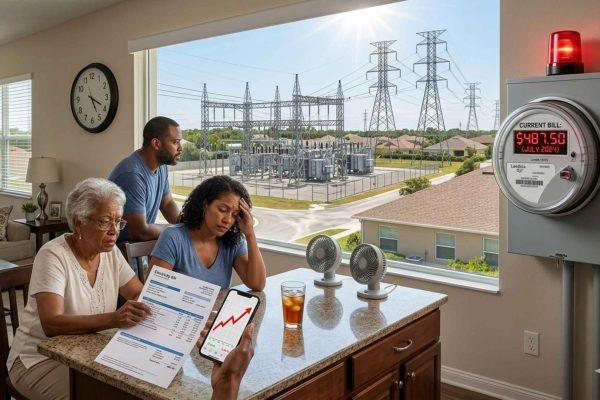
This summer, millions of families across the United States will feel a sharper sting in their wallets as electricity bills are expected to climb an average of 8.5% from June through September. According to projections from the National Energy Assistance Directors Association, reported by the New York Times, the seasonal cost could reach $778 per household. But for families in the South—including many Latino communities in Texas, Florida, and the Carolinas—the burden will be even heavier, with bills potentially soaring past $920.
The price surge isn't just about hot weather. A combination of aging power grids, extreme temperatures driven by climate change, and rising demand from energy-hungry AI data centers is pushing electricity costs above general inflation. This is especially tough for households already stretched thin by rising rents and grocery prices. As one in six US families carries debt from previous utility bills, the added pressure could push many into difficult choices between cooling and other essentials.
Why the South Will Feel It Most
In states like Florida, Georgia, and the Carolinas, electricity rates could jump by as much as 13.5%, raising seasonal spending to around $860. Texas and Oklahoma may see an 11.5% hike, pushing bills to $924. For many Latino families in these regions, air conditioning isn't a luxury—it's a lifeline. The disparity highlights how climate and infrastructure vulnerabilities hit warmer zones hardest, where staying cool is a matter of health and safety.
While global fuel prices have been volatile due to tensions in Iran, domestic natural gas has remained relatively stable. Still, experts warn that prolonged geopolitical instability could increase exposure to future price spikes. For now, the main drivers are local: outdated equipment, extreme heat, and the growing energy appetite of tech industries.
Federal Help and Practical Steps
For low-income households, the Low Income Home Energy Assistance Program (LIHEAP) offers support for families earning up to 150% of the federal poverty level. This aid can be crucial in preventing power shutoffs during heatwaves. However, with demand rising, resources may be stretched. As we've seen with other federal programs, like the end of federal rental aid putting over 5,000 NYC families at eviction risk, timely assistance can make a big difference.
Beyond government help, simple home improvements can cut costs. Specialists recommend changing air filters regularly, installing weatherstripping, and shading windows to reduce the load on air conditioners. Setting the thermostat between 70 and 78°F (21 to 25°C) when people are home can save about 3% per degree. These small adjustments add up, especially for families already navigating financial pressures like the dollar's steep drop squeezing Latino families and businesses across the US.
As summer approaches, staying cool doesn't have to mean breaking the bank. With a mix of federal aid and smart energy habits, families can weather the heat without sacrificing their budgets. For more on how economic shifts affect Latino communities, check out our coverage on homeownership slipping away as the US housing crisis deepens for Latino families.