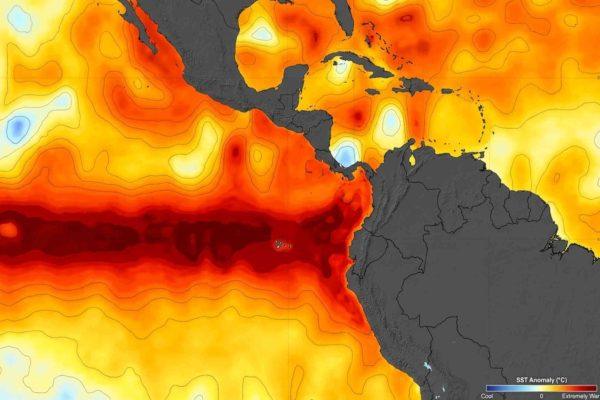
Climate scientists are sounding the alarm over a powerful Super El Niño that is building in the Pacific Ocean. According to the latest models from the National Oceanic and Atmospheric Administration (NOAA), there is an 83 percent chance this event will become one of the strongest on record, with impacts that could rival the most destructive episodes of the mid-20th century.
The phenomenon is already driving a surge of warm water toward the Americas, creating what researchers describe as a temporary ocean bulge. Along the Pacific coast, sea levels could rise up to 40 centimeters above normal—a jump that would normally take decades of gradual climate change to achieve. For communities from the chilly shores of Alaska to the southern tip of Chile, that means an immediate and heightened risk of coastal erosion, storm surges, and catastrophic flooding.
A preview of a warmer future
Oceanographers at Oxford University have used advanced modeling to project the scale of this event. Their findings suggest that between November and December, the temporary rise in sea level could match what would otherwise occur over four to five decades of steady climate change. In the Galápagos Islands, Ecuador, and Peru, water volumes could increase by 24 to 40 centimeters, effectively doubling the frequency of hazardous high tides along inhabited shorelines.
For the U.S. West Coast, the outlook is equally concerning. The combination of elevated ocean temperatures and the extra water mass is expected to intensify storm surges and accelerate coastal erosion, putting homes, infrastructure, and livelihoods at risk. As California's coastline faces erosion and cliff collapses, residents are being urged to take preventive measures now.
The effects will not be limited to the Pacific. The Super El Niño is part of a larger oscillation that interacts with the cooling phase known as La Niña, destabilizing weather patterns across the globe. Some regions will face prolonged droughts, while others will see torrential rains and flooding. This is already reshaping winter weather in places like Texas and California, and forecasters expect a wet, stormy winter for Florida as well.
Vulnerable regions and urgent preparation
Among the most exposed areas are the Galápagos Islands and the equatorial belt, where sea levels could rise by 24 to 40 centimeters. The coasts of Ecuador and Peru are also highly vulnerable, with water volume increases of up to 33 centimeters that could severely disrupt port operations and fishing communities. These are not abstract statistics; they represent real threats to homes, businesses, and ecosystems that millions of people depend on.
Local governments and community organizations are being called upon to coordinate evacuation plans, reinforce coastal defenses, and educate the public about the dangers ahead. The window for preparation is narrow, and the stakes are high. As one researcher put it, this Super El Niño is a preview of what a warmer planet will bring—and a reminder that the coastlines we cherish are more fragile than we often admit.
The coming months will test the resilience of coastal communities from Alaska to Chile. With the right preparations, the damage can be mitigated, but the warning is clear: the ocean is rising, and we must adapt.