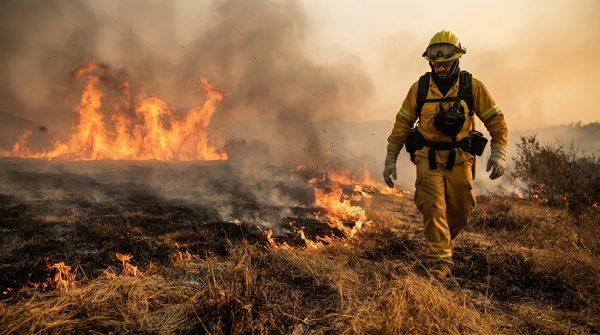
For decades, incarcerated firefighters have been the backbone of California's wildfire response, battling blazes from the front lines while serving their sentences. Yet when they returned to civilian life, their hard-earned experience often counted for nothing—no certification, no formal recognition, no clear path to a stable job. That changes now.
Governor Gavin Newsom signed Assembly Bill 2483, a landmark measure that turns prison wildfire experience into a formal credential. The law establishes the Formerly Incarcerated Firefighter Certification and Employment Program, spearheaded by Democratic Assemblymember Sade Elhawary. It's a direct response to what advocates and CalMatters have documented for years: qualified firefighters with proven skills were being shut out of permanent positions at Cal Fire simply because their training happened behind bars.
Starting July 1, 2027, the California Department of Corrections and Rehabilitation, Cal Fire, and conservation camps will coordinate to ensure every participant receives verified records of their training—covering critical courses like the S-190 wildland fire behavior class—before they're released. That administrative step is huge: it means the skills they built in the field become legitimate, documented credentials, not just stories to tell in a job interview.
Then, on January 1, 2028, hiring preferences kick in for entry-level Fire Fighter 1 positions, and field training time will count toward forestry technician roles focused on fuel mitigation. The law also survived a political hurdle—a similar proposal failed last year over concerns about mandatory quotas. This version avoids that, focusing instead on preferences and recognition.
Royal Ramey, executive director of the Forestry and Fire Recruitment Program, knows the struggle firsthand. After serving two seasons at the Batista conservation camp, he had to go through a conventional academy to build his career outside the prison system. His organization has helped over 360 formerly incarcerated individuals find work, with 60 currently active inside Cal Fire. For Ramey, this law is personal.
“The project tells incarcerated firefighters that their hard-earned experience counts,” Ramey said, according to CalMatters' Digital Democracy transcripts. “It converts their time on the line into a legitimate professional asset.”
More than a second chance: a smarter firefighting force
This isn't just about fairness—it's about public safety. Urban planners and environmental analysts point out that formalizing these pathways strengthens regional emergency readiness. When seasoned operators move directly into active prevention units, the whole system benefits from their tactical experience. Interagency collaboration between corrections and fire protection ensures that credential verification is seamless and transparent across all facilities.
Workforce development specialists will track retention rates and socioeconomic impact, measuring how many participants stay in permanent roles. County officials have also voiced support, framing this as part of a broader commitment to equitable economic reintegration through public service careers.
Of course, challenges remain. Emergency management experts stress the need to balance hiring preferences with rigorous safety evaluations in every specialized division. Standardized credential verification is essential to modernize career pathways without compromising standards. But state administrators are confident that structured frameworks will permanently strengthen both community safety and workforce diversity.
For the Latino community—which makes up a significant share of California's incarcerated population and its firefighting force—this law is particularly meaningful. It's a concrete step toward breaking cycles of poverty and incarceration, offering a real path to stability and pride. As California continues to lead on progressive policies, this one stands out as a model for the rest of the nation.
The law also arrives as California faces increasingly intense wildfire seasons, shaped by climate patterns like El Niño. Having a trained, ready workforce is more critical than ever. And for those who have already proven their mettle on the fire lines, this is a chance to turn that sacrifice into a career—and a life.