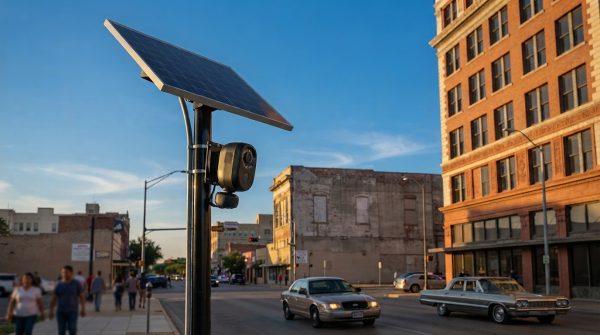
When Phil Mynona, a resident of North Richland Hills, Texas, asked local police what they were doing with their automated license plate readers, he didn't expect a bill that could buy a small fleet of patrol cars. But that's exactly what he got: a $2.3 million invoice for public records that, under Texas law, should be accessible to any citizen.
The city justified the staggering estimate by citing 14 years of mandatory administrative review required to process the request. The files Mynona sought include internal communications about the operation, technical failures, and potential misuse of Flock Safety license plate readers—devices that capture vehicle data and are increasingly common across the state.
Why the bill is so high
North Richland Hills officials say the cost reflects the sheer volume of unredacted documents and the time needed to ensure privacy protections before releasing anything. But civil rights advocates argue that such fees are a way to discourage public scrutiny. "When a city charges millions for documents that should be public, it effectively shuts down oversight," said one advocate who asked not to be named.
Mynona has since narrowed his request to lower the cost, and the city says the final bill will be considerably less. Still, the initial quote has sparked a statewide debate about municipal transparency and the growing use of surveillance technology.
License plate readers: a double-edged sword
Automated license plate readers (ALPRs) capture vehicle characteristics and allow law enforcement to track movements across jurisdictions without a warrant. While police tout their effectiveness in solving crimes, privacy advocates warn that sharing data between departments without strict rules poses serious risks to civilians on public highways.
Investigations have already revealed misuse. In Lufkin, a police officer was criminally convicted after running unauthorized database queries. State authorities have also restricted access to regional networks after discovering thousands of unauthorized logins occurring every few seconds.
Disparities in how cities respond
Mynona's case isn't isolated. Across Texas, public records requests related to surveillance have met with wildly different responses. Sealy provided over 400,000 pages for free, while Victoria charged $5,000. News outlets have faced similar hurdles: KPRC was quoted $121,000, and Irving demanded $70,000 from a requester.
The Texas Department of Public Safety (DPS) has also changed its approach, withholding records and consulting the Attorney General before releasing anything. Governor Greg Abbott has ordered budget restrictions and suspensions of some equipment after uncovering abuses tied to the state's surveillance network.
The bigger picture: transparency vs. secrecy
Texas operates more than 13,000 active cameras, with DPS alone running over 900. Yet public visibility is minimal: only 60 police agencies statewide use transparency portals to share their activities, and just 16 make detailed search logs available. Some cities, like Live Oak, publish interactive maps of camera locations, while others, like the Department of Transportation, cite public safety to keep everything secret.
State legislators are under growing pressure to reform public information laws and eliminate excessive fees that block independent journalism and citizen oversight. Establishing transparent price caps would be a step toward restoring trust.
For now, Mynona's fight is a reminder that in the digital age, the cost of accountability can be steep—unless citizens and lawmakers push back.