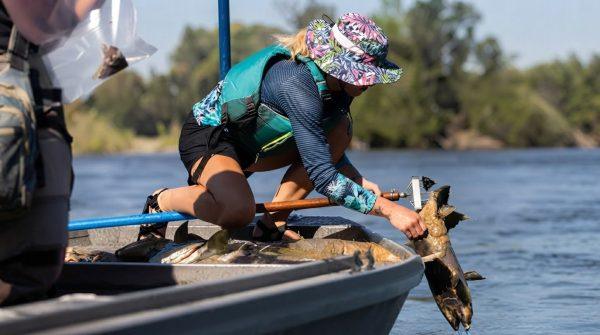
For years, the mysterious deaths of young Chinook salmon in California's Sacramento River puzzled biologists and conservationists. Now, a team of 37 researchers has pinpointed the culprit: a thiamine-destroying enzyme found in anchovies, a fish that has become a dominant part of the salmon's diet.
The findings, led by Nathan Mantua of the Southwest Fisheries Science Center, explain why between 40% and 50% of winter-run Chinook fry died from 2021 to 2024, with nearly 36% mortality in 2025. The enzyme, thiaminase, breaks down thiamine (Vitamin B1), leading to severe neurological damage in young salmon, causing erratic swimming and spiral movements first observed in 2020.
Winter-run Chinook salmon have been protected under the U.S. Endangered Species Act since 1994. Historically, about 200,000 of these fish returned to the Sacramento River each year to spawn. But that number has plummeted to barely 1,000 returning spawners annually in California's Central Valley, according to Biographic.
Anchovy boom, salmon bust
The root of the problem lies in a dramatic shift in the marine food web off the coast of northern California. Since 2014, the availability of krill, squid, and rockfish—the salmon's traditional prey—has declined significantly. In their place, northern anchovies have proliferated, becoming a near-exclusive food source for young salmon between 2014 and 2021.
Anchovies are rich in thiaminase, and when salmon rely almost entirely on them, they develop a thiamine deficiency that proves lethal. Researchers from the National Oceanic and Atmospheric Administration (NOAA) suggest that these changes at the base of the food web are linked to deep physical alterations in the marine ecosystem of the U.S. West Coast.
"The salmon are essentially eating a single food source that is toxic to them in high quantities," explains a fishery analyst familiar with the study. "This is a trophic dynamic driven by shifts in the California Current, and it's having devastating consequences."
The impact extends beyond California. Similar thiamine deficiencies have been observed in other northern rivers, including the Fraser River in British Columbia and the Yukon River in Alaska, according to chemist Cody Pinger.
Hope on the horizon
While the situation is dire, there is a glimmer of hope. Hatcheries have developed a preventive treatment: injecting adult female salmon with thiamine before stripping their eggs. This intervention temporarily halts the transmission of the deficiency to the next generation, offering a lifeline for the species.
Conservationists and federal agencies are urging the public to stay informed through official advisories. The U.S. Fish and Wildlife Service has been sharing updates on social media, emphasizing the importance of monitoring and restoration efforts.
"This is a complex ecological puzzle," says Mantua. "But understanding the cause is the first step toward finding a solution. Restoring prey diversity and addressing the underlying shifts in the California Current will be crucial."
For the winter-run Chinook, the road to recovery is long and uncertain. But with scientists now armed with a clear diagnosis, there is renewed hope that these iconic fish can be saved from the brink of extinction.