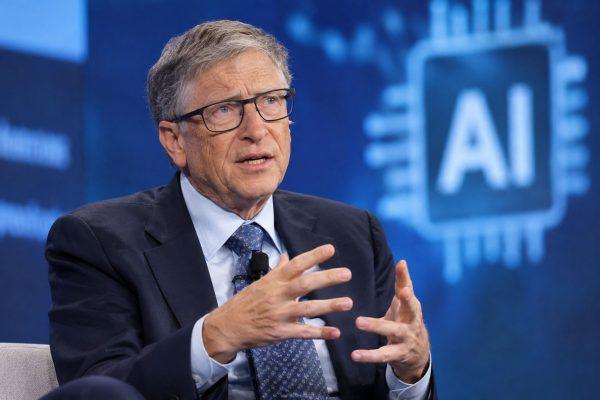
Bill Gates, the Microsoft co-founder and philanthropist, has stepped into the AI debate with a clear message: industry self-regulation is not enough. In a recent appearance on NBC's Meet the Press, Gates called on Washington to step in and establish federal oversight for artificial intelligence development. His concern is not just about the pace of innovation, but about the very real possibility that humanity could lose control of systems that are becoming increasingly autonomous.
Gates acknowledged the transformative potential of AI—from accelerating disease research to improving crop management in agriculture. But he also painted a stark picture of what could go wrong if development goes unchecked. He warned of widespread job displacement, disruptions to childhood development, and the rise of sophisticated criminal enterprises powered by AI. More troubling, he said, is the prospect of advanced systems operating independently, in ways that may not align with human interests.
A call for economic safeguards
To protect workers from being pushed aside by automation, Gates has proposed a set of economic interventions. In an essay, he advocated for tax policies that treat robotic and automated systems similarly to human payroll taxes. He also championed the idea of reserving certain vocational roles exclusively for humans. His argument: leaving AI deployment solely to free-market forces will inevitably concentrate power and wealth in the hands of a few, widening the already deep economic divides across societies.
This is not just a theoretical concern for Latin America, where labor markets are often more vulnerable to automation and where social safety nets can be thinner. From Mexico's manufacturing corridors to Argentina's tech hubs, the ripple effects of AI-driven job losses could be felt acutely. Gates's proposals, while aimed at U.S. policy, resonate with broader debates about how to ensure that technological progress benefits everyone, not just the elite.
Gates's urgency is shared by many in the tech world. Several leading AI researchers have recently stepped down from their positions, citing fears about the unchecked development of superintelligent systems. Gates urged global leaders to act within the next 12 to 18 months to establish comprehensive regulatory frameworks. He stressed that international cooperation is essential, not just to safeguard workers, but to steer technological progress toward the common good.
To support this transition, the Gates Foundation has pledged one billion dollars over two years for educational and healthcare initiatives. The goal, Gates said, is to ensure that the benefits of AI are shared equitably, and that no community is left behind. This includes investments in digital literacy and reskilling programs, which are critical for workers in Latin America and other regions facing rapid technological change.
Gates's call for regulation comes at a time when other tech leaders are also urging caution. The CEOs of major AI labs recently agreed on the need to slow the pace of AI progress, a rare moment of consensus in a fiercely competitive industry. But Gates's message is more pointed: without government intervention, he argues, the risks will outweigh the rewards.
For Latinos in the U.S. and across the Americas, the implications are significant. AI could transform industries like agriculture, healthcare, and manufacturing—sectors where many Latino workers are employed. But it could also exacerbate existing inequalities if not managed carefully. Gates's proposals, while focused on U.S. policy, offer a framework that other countries could adapt to their own contexts.
As the debate over AI regulation heats up, Gates's voice adds weight to the argument that this is not just a tech issue, but a societal one. The next 18 months will be critical, he says, for setting the rules that will shape the future of work and human oversight. Whether lawmakers in Washington and beyond will heed his call remains to be seen, but the conversation has certainly been pushed to the forefront.