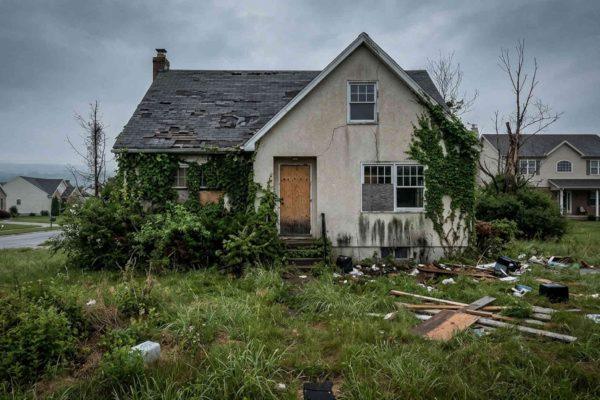
Across the United States, a troubling trend is quietly reshaping neighborhoods: zombie homes. These are properties that owners have abandoned before banks complete the foreclosure process, leaving them vacant and neglected for months. According to new data from ATTOM, the number of such homes has risen in 38 states and the District of Columbia, marking a return to levels not seen since the aftermath of the 2008 crash. While they represent just 3.4% of all properties in foreclosure, their impact on local communities—especially in Latino-majority areas—is anything but small.
Where Zombie Homes Are Multiplying Fastest
The geographic spread is uneven but telling. Georgia leads with a staggering 98% increase in zombie homes, followed by North Carolina, Indiana, and Iowa. These states have seen foreclosure activity normalize after years of pandemic-era moratoriums and forbearance programs. In contrast, New York managed to slightly reduce its zombie inventory, thanks to stricter state oversight and slower foreclosure timelines. The variation underscores how local housing policies and economic conditions shape the crisis differently across regions.
For Latino homeowners and renters, the rise of zombie homes is especially concerning. Many Latino families live in older, more affordable housing stock in cities like Houston, Dallas, and Los Angeles—areas where abandoned properties can quickly drag down entire blocks. A single zombie home can reduce the value of neighboring houses by up to 5%, according to studies, and often becomes a magnet for vandalism, pests, and illegal dumping. Municipalities then face the cost of securing and maintaining these sites, a burden that falls disproportionately on already strained local budgets.
In Texas, where the apartment market is booming as renters flock to Sun Belt cities like Houston and Dallas, the contrast between thriving multifamily developments and decaying single-family homes is stark. Texas Apartment Market Booms as Renters Flock to Sun Belt Cities Like Houston and Dallas highlights how rental demand is reshaping urban landscapes, but zombie homes threaten to undermine that progress in older neighborhoods.
Why This Matters for Latino Buyers and Communities
The current wave of zombie homes is not a repeat of 2008—safeguards like tighter lending standards and stronger foreclosure protections are in place. Yet the trend serves as an early warning. For Latino buyers, many of whom are first-generation homeowners with limited equity, a zombie home next door can mean a sudden drop in property value and a harder time selling or refinancing. In states like California, where the housing market has hit record highs, working-class Latinos are already being pushed out. California's Housing Market Hits Record $914K, Pushing Working-Class Latinos Out shows how affordability pressures compound the risks of neighborhood blight.
Moreover, the rise in zombie homes coincides with a broader shift in the U.S. job market, where blue-collar skills are becoming more valuable due to AI and automation. AI Boom Reshapes US Job Market: Blue-Collar Skills Become Gold for Latino Workers explains how this could help Latino workers stabilize their finances, but only if their neighborhoods remain safe and desirable places to live.
Local governments are responding with targeted programs. Some cities are using land banks to acquire and rehab zombie homes, while others are streamlining foreclosure processes to reduce the time properties sit vacant. But progress is slow, and the data suggests that without intervention, the number of zombie homes could continue to climb. For now, the message for Latino homeowners and buyers is clear: stay informed about foreclosure activity in your area, and advocate for policies that keep neighborhoods whole.
As the housing market evolves, the fate of zombie homes will be a key indicator of community health. Whether in the Bronx, where affordable housing lotteries are being overhauled, or in Miami, where luxury towers attract New York buyers fleeing taxes, the presence of abandoned properties tells a story of inequality and neglect. NYC Affordable Housing Lottery Overhaul: What Bronx Latinos Need to Know and New York Buyers Flood Miami Luxury Tower to Dodge New Tax on Second Homes illustrate the contrasting realities of housing in America today.