Just west of Jacksonville, along the banks of the St. Johns River, lies a place that time and military strategy erased from the map. Yukon, Florida, was once a bustling neighborhood with streetcars, brick roads, and a vibrant commercial life. But in 1963, the U.S. Navy decided that the town's proximity to Naval Air Station Jacksonville posed an unacceptable risk to flight operations. The result: a systematic evacuation that turned a living community into a ghost town.
A Plantation Past and a Post-War Boom
The land that became Yukon has a deeper history, stretching back to the late 18th century. Originally part of the Mulberry Grove plantation, established in 1787 under a Spanish land grant, the area was a center for cotton cultivation worked by enslaved people. After the U.S. Civil War, formerly enslaved individuals founded the Blackpoint Settlement on the same grounds. By the early 20th century, the area evolved into a modern suburb, complete with a 300-unit subdivision called Dewey Park and paved roads built before 1917. The community grew steadily, connecting key points across the region and offering families a strategic location between the St. Johns and Ortega rivers.
World War I accelerated the area's industrial growth, and by the mid-20th century, Yukon was a thriving neighborhood with its own post office, Baptist church, and a bustling commercial corridor. But the same strategic location that made it attractive for residents also made it a problem for the Navy. As the Cold War intensified, the military's need for expanded air operations clashed with the civilian presence below the flight path.
The Evacuation and Its Aftermath
In 1963, military authorities ordered the eviction of all residents, citing the critical risk of aircraft accidents. The evacuation was swift and total. Homes were demolished, streets were abandoned, and the community was erased from residential maps. The fears were not unfounded: in 2005, a Navy jet crashed into a nearby apartment complex, and in 2019, a commercial aircraft incident further validated the safety concerns. The U.S. government leased the land to the Navy in 1979, and later, with the push from councilwoman Tillie Fowler, the area was transformed into Tillie K. Fowler Regional Park.
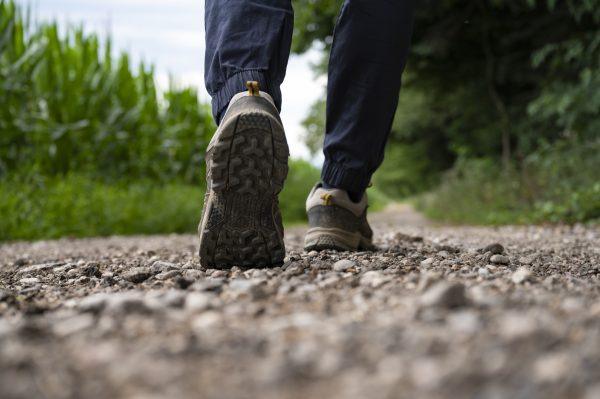
Today, the park stewards the remnants of Yukon. Visitors can walk along old paved streets, explore a cemetery dating back to the plantation era, and see the foundations and sidewalks that still protrude through the vegetation. The old Yukon post office and the Baptist Church still stand along Roosevelt Boulevard, silent witnesses to a community that was sacrificed for national security.
Exploring the Ghost Town Today
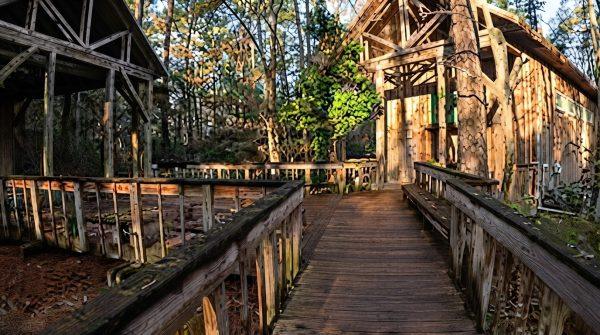
Tillie K. Fowler Regional Park offers nearly six miles of trails that weave through the historic remnants, integrating them with modern recreational spaces for kayaking, cycling, and nature walks. The park is open daily from 8:00 a.m. to 8:00 p.m., with free admission and parking. For those seeking a deeper experience, the Nature Center is open on Fridays, Saturdays, and Sundays from 1:00 p.m. to 4:00 p.m. The park is located at 7000 Roosevelt Blvd., Jacksonville, FL 32244.
While Yukon itself is unlikely to ever regain its former bustle, nearby businesses like J.L. Trent's Seafood and Grill and Murray's Tavern welcome curious travelers who want to learn more about the town's history over a meal. The integration of history into a functional recreational space prevents oblivion from completely reclaiming the territory, transforming the tragedy of the evacuation into a cultural asset that welcomes all socioeconomic levels.
For Latino families in Florida, this story resonates with broader themes of displacement and resilience. The history of Yukon is a reminder of how military and economic forces can reshape communities, much like the experiences of many Latino neighborhoods across the United States. To explore more about how history and identity intersect, check out our article on New Jersey Exhibit Traces 250 Years of Latino Impact on US History.
As you walk the brick paths of Yukon, you're not just exploring a ghost town—you're walking through a chapter of American history that speaks to the power of memory and the resilience of place. The park is a testament to how even a vanished community can find new life as a space for reflection and recreation.