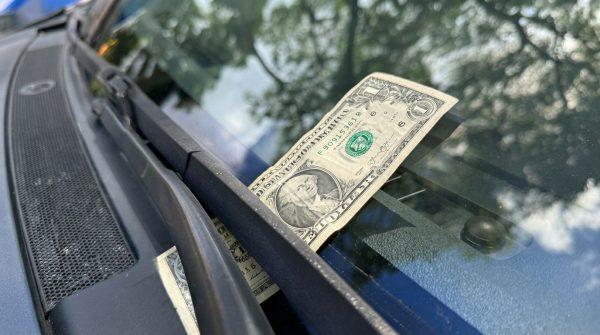
Picture this: you're leaving a grocery store in Houston or a mall in Los Angeles, and there's a crisp $20 bill tucked under your windshield wiper. Your first instinct might be to grab it—but that's exactly what thieves are counting on.
Law enforcement agencies across the U.S., including the Newton County Sheriff's Office in Georgia, have issued warnings about a growing scam where criminals place fake currency—ranging from $20 to $100 bills—on windshields. The goal is simple: lure the driver out of the car while the engine is still running, leaving the door unlocked and the keys in the ignition.
How the scam works
The trick is carefully timed. Drivers typically notice the bill only after they've gotten in, started the engine, and are about to pull away. That's when curiosity kicks in. They step out to grab the cash, and in those few seconds, an accomplice slips into the driver's seat and takes off.
It's not just cash, either. Authorities report that thieves also use promotional flyers, empty envelopes, or even notes that look like parking tickets to achieve the same distraction. The underlying tactic is always the same: exploit a moment of inattention to steal a vehicle.
What drivers should do
Security experts and police are unanimous in their advice: if you see anything unusual on your windshield, do not get out to inspect it. Instead, lock your doors, start the engine, and drive to a safe, well-lit area before checking what's there. If you're already inside the car and notice the bill, resist the urge to grab it—just drive away.
"No bill found on a windshield justifies risking your safety or your vehicle," a spokesperson for the Newton County Sheriff's Office said. "Treat any unexpected object as a potential threat."
This advice is especially relevant for Latino drivers, who are often targeted in parking lots of busy shopping centers and community events. In cities like Miami, Chicago, and Phoenix, where car ownership is essential, being aware of these tactics can make all the difference.
Prevention is your best defense
Beyond the windshield trick, experts emphasize basic habits that can thwart most theft attempts: always lock your doors, never leave your car running—even for a moment—and be extra cautious in poorly lit or isolated parking areas. If you see someone acting suspiciously near your vehicle, trust your instincts and call 911.
Community organizations are also stepping up. In California, the Department of Justice regularly updates safety advisories, and local police departments distribute flyers in Spanish and English to raise awareness. Similar efforts are underway in Texas, where heat-related protections are also a priority for drivers.
For those who rely on their cars for work—like rideshare drivers or delivery workers—the stakes are even higher. A stolen vehicle can mean lost income and a major setback. That's why it's crucial to stay alert and never let curiosity override caution.
If you do fall victim to this scam, report it immediately. Dial 911 or your local non-emergency number, and provide as many details as possible about the vehicle and the suspects. Quick reporting can help police recover your car and prevent others from being targeted.
As with many scams, awareness is the first line of defense. By knowing how this trick works, you can avoid becoming another statistic. And remember: that "lucky" bill on your windshield might just be a trap.