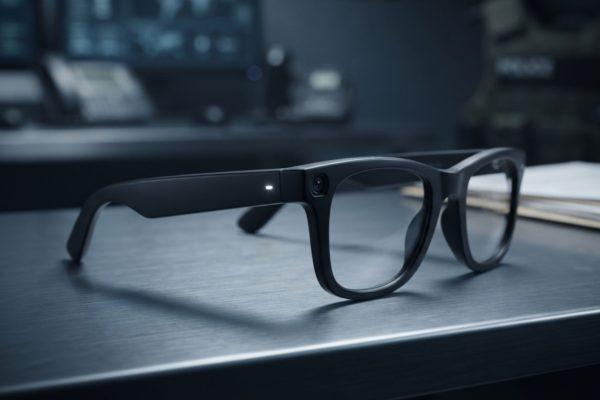
Across the United States, law enforcement and federal agencies are quietly wrestling with a new kind of eyewear: Ray-Ban Meta glasses. These smart glasses, which pack cameras and microphones into frames that look just like a classic pair of shades, have triggered a wave of internal security alerts. Documents obtained by the transparency group Property of the People and reviewed by international media show that agencies from New York to Washington are treating them as a potential tool for covert surveillance and information gathering.
The concern is not about the technology itself, but how easily it can be used without raising suspicion. Unlike a phone or a traditional camera, these glasses are designed to be worn. They blend into everyday life, making them ideal for recording police facilities, detention centers, or even sensitive conversations without anyone noticing. For officers and counterintelligence units, that is a red flag.
From reconnaissance to restricted spaces
One of the most alarming cases cited in the documents involves the FBI's warning to local authorities about an individual who used Ray-Ban Meta glasses to conduct reconnaissance before a truck attack in New Orleans during the holiday season. That incident, which shook the city, underscored how easily these devices could be used for pre-attack planning. The glasses allowed the person to capture video and audio of the area without drawing attention, providing valuable intel for a potential strike.
In response, Immigration and Customs Enforcement (ICE) has taken a hard line. The agency now classifies these glasses as body-worn cameras and has banned them outright from federal workspaces. The goal is to prevent leaks of sensitive data, especially in facilities where undocumented immigrants are held or processed. Other agencies, including the NYPD, have distributed memos nationwide, urging officers to be aware of the risk and to watch for anyone wearing these glasses near police stations or other restricted areas.
Meta, the company behind the glasses, has pushed back with software updates. They've made it impossible to disable the LED indicator light that signals when the camera is recording, and they've added a mechanism that automatically blocks the camera if someone tries to tamper with the hardware. But these measures only go so far. A determined person could still find ways to misuse the device, and the very design that makes them popular—their discreet, everyday look—is what makes them a security headache.
Privacy vs. surveillance: a familiar tension
For civil rights groups, the government's alarm over these glasses feels like a double standard. They point out that police departments across the country have embraced body cameras and other surveillance tools, often with little public oversight. Meanwhile, they're cracking down on citizens who want to record police interactions, citing security concerns. This tension is not new, but smart glasses have brought it into sharper focus.
"The same agencies that monitor our every move are worried about being monitored themselves," said one digital rights advocate who asked not to be named. "It's a classic case of 'do as I say, not as I do.'" The debate is playing out in cities like Bogotá and México City, where police reform and citizen oversight are hot topics, but it's also resonating in the United States, where Latino communities often have complicated relationships with law enforcement.
For many Latinos, the issue hits close to home. In neighborhoods where police presence is heavy, the ability to document interactions can be a lifeline. Body camera footage has been crucial in holding officers accountable in cases of excessive force, and the same logic applies to citizen recordings. But if authorities succeed in restricting these glasses, they could set a precedent that limits transparency.
The challenge for lawmakers is to balance the need to protect critical infrastructure with the public's right to document potential abuses. Some have proposed regulations that would require smart glasses to emit a clear signal when recording, or that would ban them from certain sensitive areas while allowing them elsewhere. But any such rules will need to be crafted carefully to avoid infringing on civil liberties.
As the technology evolves, so will the debate. Ray-Ban Meta glasses are just the beginning. Newer devices, like the iPhone Duo, are also raising questions about privacy and security. The key is to find a path that respects both safety and freedom, a balance that has always been delicate in the Americas.
For now, the warnings stand. Police and federal agencies are on alert, and the public is left to wonder: who is watching whom? The answer may depend on where you stand—and what you're wearing.