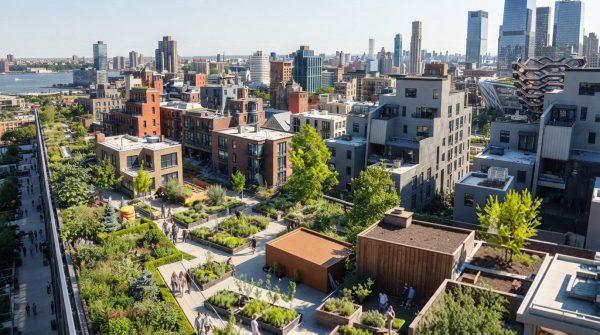
New York City's ambitious plan to add more affordable housing on the Upper East Side is running into a wall of local resistance. The initiative, part of a broader citywide effort to tackle the housing crisis, has sparked a fierce debate between municipal leaders who say speed is essential and neighborhood groups who fear the changes will erase the area's identity.
A tale of two towers
Nowhere is the tension more visible than on Third Avenue and 75th Street, where two luxury condominium towers have risen over the past decade and a half. These buildings, with penthouses priced at nearly $17.9 million and one-bedrooms starting at $8.5 million, stand in stark contrast to the city's urgent need for affordable spaces. Despite their imposing height, the towers contain just 77 apartments—roughly the same number as the smaller buildings they replaced, according to public property records.
This paradox fuels the anger of local leaders who argue that such developments do little to solve the affordability crisis. "We're losing the very fabric of our community," says María González, a longtime resident and member of Community Board 8. "These towers cater to the ultra-wealthy while working families are pushed out."
The city's plan and its critics
The new municipal initiative aims to accelerate real estate development in targeted zones by streamlining bureaucratic procedures and reducing costs for private builders. A key component mandates that a fixed percentage of units in every project be reserved for low- and moderate-income households. But critics question whether this rule will truly deliver.
"The city is moving too fast, without enough community input," says City Council Member Julie Menin, who represents the district. "We need housing, but it must be done thoughtfully, not at the expense of our neighborhoods."
Brad Greenburg, executive director of the NYU Furman Center, adds that current building trends don't align with the genuine social demands of voters. "We're seeing a net gain in units, but very few are affordable," he notes.
Data and the pushback
City data from the Department of City Planning shows that over the past 15 years, property owners in the Upper East Side have demolished or combined 2,687 existing homes while introducing 4,598 new ones—a net gain of over 1,900 residences. Yet the share of affordable units has actually decreased, intensifying the debate.
In 2025, voters approved a measure proposed by then-Mayor Eric Adams that fast-tracks the review process for housing developments and bypasses City Council approval in 12 community districts that produced minimal affordable housing. The Upper East Side is among them, and independent analyses by the NYU Furman Center rank it among the bottom twelve underperforming neighborhoods in this sector.
Local residents have organized frequent protests outside municipal offices, demanding a greater say in urban planning decisions. "We're not against new housing," says Carlos Rivera, a member of the neighborhood association. "But we want it to be truly affordable and to respect the character of our streets."
What's next for the Upper East Side?
The Department of City Planning maintains its target of authorizing thousands of new residences before the decade ends. Mayor Zohran Mamdani has embraced fast-track protocols to push through neighborhood-wide rezonings, while the Department of Housing Preservation and Development mandates over 12,700 new residences within Manhattan Community District 8 over the next five years.
Local administrators continue to host dialogue sessions with community leaders to mitigate negative side effects. Experts remain cautiously optimistic that a balance can be struck between modernization and historic preservation—if strict oversight governs the upcoming phases.
For Latino families in New York, the outcome of this battle is especially significant. As the city's housing lottery becomes a critical pathway for many, the lack of affordable units on the Upper East Side limits options. Meanwhile, similar struggles play out across the country, from Los Angeles' record investment to the empty homes that sit while Latino families struggle.
The coming months will test whether New York can deliver on its promise of inclusive growth without trampling the voices of those who call the Upper East Side home.