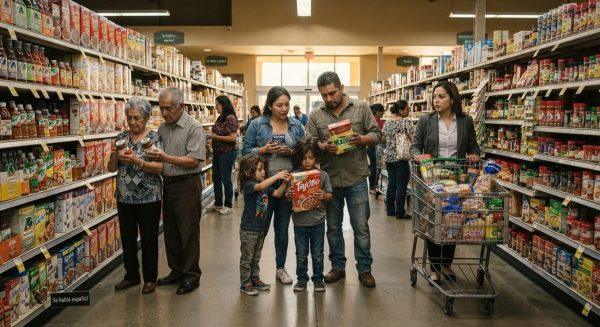
Across the United States, more than four million people have seen their Supplemental Nutrition Assistance Program (SNAP) benefits disappear as new federal restrictions take hold. The changes, pushed by the Trump administration and codified in recent legislation, have tightened work requirements, narrowed eligibility for non-citizens, and imposed stricter administrative controls. For many Latino families—especially those in mixed-status households—the loss of this support has been immediate and devastating.
Community organizations from Los Angeles to Houston report that the new rules are causing a massive drop in enrollment, even among people who remain eligible. Bureaucratic hurdles, such as additional paperwork and in-person verification appointments, are preventing families from accessing the help they need. In Arizona, for example, the state has seen record reductions in its SNAP rolls, while local food banks are struggling to keep up with surging demand.
Who is losing SNAP benefits?
The new regulations significantly expand work requirements for adults aged 18 to 49, and for the first time, extend them to those aged 50 to 64. Veterans and formerly homeless individuals, who previously had exemptions, now must also meet these conditions. But perhaps the most alarming change is the elimination of eligibility for many non-citizen immigrants, including those with green cards who have not yet met the new stricter criteria. This has left entire communities without a safety net, forcing them to rely on emergency food assistance or go without.
According to the U.S. Department of Agriculture (USDA), the decline in SNAP participation is partly due to an improving economy and a reduction in improper payments. However, anti-hunger advocates argue that the real driver is the tightening of eligibility rules, not a sudden improvement in people's financial situations. The Congressional Budget Office projects that these restrictions will continue to reduce monthly participation for the next decade, meaning the impact will be long-lasting.
Economic ripple effects
The loss of SNAP benefits is not just a personal crisis for families; it also has significant economic consequences. Retail trade associations estimate that the reduction in food purchasing power will lead to an $88 billion hit to grocery sales over the coming years. Local supermarkets, especially those in low-income neighborhoods, are already feeling the pinch. In states like Illinois, some relief has been offered—such as a one-time $400 payment for families who lost benefits—but that is a drop in the bucket compared to the ongoing need.
Starting in October, the federal government will reduce its matching funds for state administrative costs from 50% to 25%, shifting a heavier financial burden onto state governments. This could force states to cut other critical programs or impose even stricter eligibility checks to avoid penalties for high error rates. Economic experts warn that this will only deepen the hardship for low-income families, who are already grappling with inflation and rising food prices.
Latino community hit especially hard
Research shows that the Latino community has been disproportionately affected by these cuts. Over 1.3 million people from ethnic minority groups have been removed from SNAP in recent months, and Latinos make up a significant share of that number. This is particularly troubling given that Latino families often have higher rates of food insecurity and rely on SNAP to make ends meet. The loss of benefits is likely to exacerbate existing inequalities and push more families into poverty.
Food banks in cities with large Latino populations, such as San Antonio, Phoenix, and Miami, are reporting unprecedented demand. Volunteers say they are seeing families who have never needed assistance before, and many are struggling to provide enough food. The situation is so dire that some community leaders are calling for emergency federal intervention to protect children and vulnerable adults from hunger.
While the USDA defends the changes as necessary for fiscal efficiency, the human cost is undeniable. As one advocate put it, "These are not just numbers; these are our neighbors, our abuelitas, our children." The debate over food assistance is far from over, but for millions of families, the immediate crisis is already here.
For those affected, there are some resources available. Illinois has offered a one-time payment to families who lost benefits, and other states may follow suit. But the long-term solution requires a reevaluation of policies that are pushing vulnerable communities to the brink. As the impact on Latino families becomes clearer, the call for change grows louder.