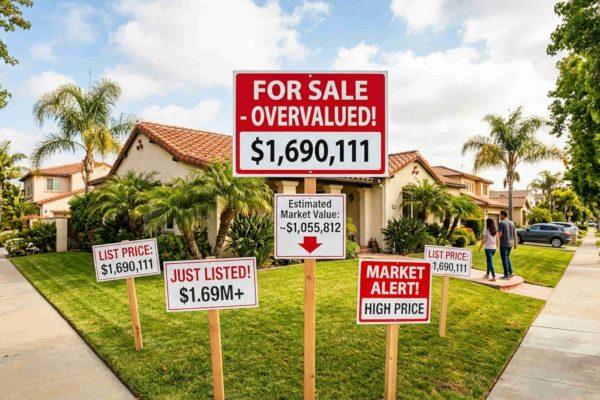
The US housing market is sending mixed signals, and for Latino families looking to buy a home, the red flags are hard to ignore. A recent study by MoneyLion, which compared Zillow data with median listing prices in the 200 largest metropolitan areas, found that several markets—especially in Texas, Florida, and California—are seeing homes priced well above their estimated value. This isn't just a numbers game; it's a real barrier for first-time buyers and a sign that speculation may be outpacing reality in some regions.
Texas Leads the Overvaluation Trend
Texas stands out in the ranking, with six of its cities landing among the 20 most overvalued metro areas. This pattern extends across the South, with Florida, Alabama, Mississippi, and Tennessee also showing significant gaps between list prices and appraised values. The situation is most extreme in Santa Maria, California, where the difference between average home value and listing price exceeds $600,000. For Latino buyers in cities like Houston, San Antonio, or Austin, this means that a home that seems affordable on paper might actually be a risky investment.
This overvaluation isn't random. It reflects a market where seller expectations have drifted far from what appraisers and comparable sales suggest. As Texas and Florida cement their status as corporate relocation giants, demand has surged, but supply hasn't kept pace. The result? A housing stock that's increasingly out of reach for working-class families, many of whom are Latino.
How to Spot an Overpriced Home
Financial experts advise buyers to pay close attention to how long a property stays on the market. Homes with inflated prices tend to linger, as buyers are unwilling to meet unrealistic asking prices. In many of these overvalued markets, the turnover is noticeably slower than the national average.
Beyond time on market, it's crucial to compare similar homes in the same neighborhood. Look at recent sales, not just current listings. Also, schedule a thorough inspection to uncover any hidden issues that could justify a lower offer. Don't let the fear of missing out push you into a bad deal. The national median price for existing homes hit $417,700 in April, marking 34 consecutive months of increases. That trend underscores the importance of having accurate, up-to-date information before signing anything.
For Latino families, especially those in California's housing market, where the median price has reached a record $914,000, the stakes are even higher. Many are being priced out of neighborhoods they've called home for generations, forced to look farther inland or to other states entirely.
What This Means for Latino Buyers
The overvaluation trend is more than a financial footnote; it's a cultural and economic challenge. Homeownership has long been a cornerstone of wealth-building for Latino communities, but inflated prices make it harder to achieve. In cities like Miami, where luxury towers are drawing New York buyers looking to dodge new taxes, the local market becomes even more competitive for those seeking a primary residence.
Experts recommend that buyers work with a trusted real estate agent who understands the local market and can help identify fair prices. They also suggest getting pre-approved for a mortgage to strengthen your position when making an offer. Patience and research are your best allies. The market may cool in some areas, but for now, the key is to avoid overpaying for a home that won't hold its value.
As the US housing market continues to evolve, Latino buyers must stay informed and cautious. The dream of homeownership is still within reach, but it requires navigating a landscape where overvaluation is a real and present danger.