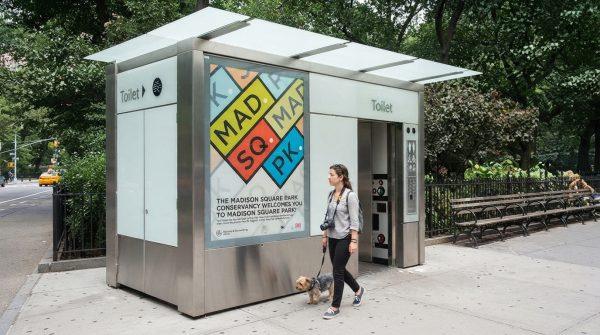
New York City has taken a bold step in addressing its chronic shortage of public restrooms. Under a $4 million pilot program spearheaded by Mayor Zohran Mamdani's administration, 17 automated modular toilets have been deployed across Brooklyn and Queens. The initiative, which began in September 2026, aims to provide relief in busy commercial corridors where finding a clean, accessible bathroom has long been a daily struggle for residents and visitors alike.
But these are not your average street-level facilities. Each unit is equipped with smart technology that tracks usage, enforces a strict 10-minute time limit, and—when the clock runs out—automatically opens the door, whether you're ready or not. The system is designed to deter loitering and ensure turnover, but it has ignited a heated debate about privacy, dignity, and who gets left behind.
How the smart toilets work
To enter, users must either send a text message to a designated number or tap a compatible payment card. Once inside, a digital timer begins counting down from 10 minutes. As the time winds down, an audio warning—broadcast in multiple languages—announces that the session is about to end. When the timer hits zero, the door unlocks automatically, leaving the user exposed to the street if they haven't finished.
City officials defend the system as a necessary measure to prevent unauthorized occupation and maintain hygiene. "These units are engineered to optimize public space management," said a spokesperson for the Department of Transportation. "The technology ensures that facilities are available for the maximum number of people throughout the day."
However, critics argue that the rigid time limit fails to account for the realities of human need. "What about someone with a medical condition, or a parent with a young child?" asked María González, a community organizer in Bushwick. "Ten minutes is not enough for everyone, and the forced opening is humiliating."
Privacy and surveillance concerns
Beyond the physical intrusion, digital privacy advocates are raising alarms about the data collected by these toilets. The text-message and card-tap entry systems log usage patterns, which could be linked to individuals. "This is a surveillance tool disguised as a public amenity," said Elena Torres, a privacy researcher at the Digital Rights Coalition. "We're creating a database of who uses the bathroom, when, and for how long."
The city maintains that the data is anonymized and used solely for operational purposes, but skeptics remain unconvinced. "Once the infrastructure is in place, it's easy to expand its use," Torres added. "We need clear policies and oversight before this becomes the norm."
Transportation officials counter that the technology is a deterrent against drug use and other illegal activities, which have plagued public restrooms in the past. But community boards in Queens and Brooklyn are demanding revisions to ensure universal accessibility, including emergency override options and longer time limits for those with disabilities.
Accessibility gaps
One of the most pressing issues is the digital barrier. Not everyone owns a smartphone or a compatible payment card. "This system excludes the very people who need public toilets the most—the unhoused, the elderly, and those living in poverty," said James Rodriguez, a policy analyst at the Urban Justice Center. "Requiring a phone or card to access a basic human need is discriminatory."
The city has not yet announced plans for alternative entry methods, such as coin-operated or staffed facilities. In the meantime, residents are advised to register their cards or numbers in advance, and to monitor their session timers closely.
Looking ahead
Despite the controversies, the pilot has seen high usage—over 1,700 sessions daily—indicating a strong demand for public sanitation. City agencies are now reviewing feedback and considering expansion to other boroughs. "We're listening to the community," said a city official. "Adjustments will be made based on what we learn."
For now, New Yorkers in Brooklyn and Queens are navigating the new normal of timed bathroom breaks. As the city continues to roll out these free public bathrooms, the debate over privacy and dignity is far from over. For many in the Latino community, who have long advocated for better public services in their neighborhoods, this is a familiar story: progress that comes with strings attached.
Similar tensions have played out in other cities, from time-based policies to debates over public space. The question remains whether New York's experiment will set a precedent for the rest of the country—or serve as a cautionary tale.