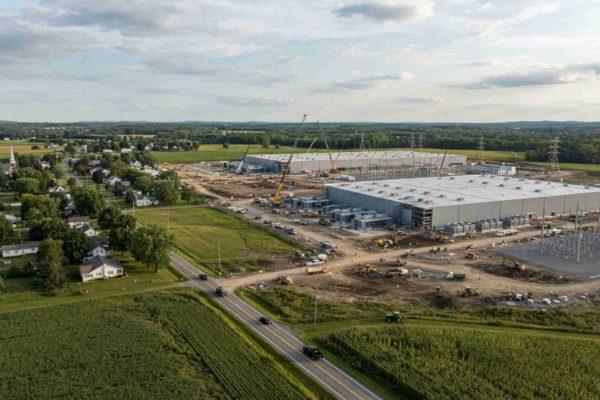
In the quiet rural landscape of western New York, the town of Alabama—home to roughly 1,800 people—has become an unlikely flashpoint in the nation's artificial intelligence boom. A proposed data center campus, backed by a $19.5 billion investment, could transform this corner of Genesee County into a hub for hyperscale computing. But the project has ignited a fierce local battle over growth, environment, and the future of a tight-knit community.
The developer, Stream U.S. Data Centers, envisions a sprawling complex at the STAMP industrial park, with three massive buildings covering 2.2 million square feet. At full buildout, the campus would demand around 500 megawatts of electricity—enough to power hundreds of thousands of homes. The scale is staggering, and so are the stakes for a town that has never seen anything like it.
A state pause, but not a local one
In July, Governor Kathy Hochul issued an executive order pausing certain state environmental approvals for new data centers requiring at least 50 megawatts, while the state studies their impact on electricity, water, and communities. But Alabama Town Supervisor Rob Crossen insists the order doesn't relieve the town of its legal duty to review Stream's application. "The governor's executive order changes nothing as far as our statutory requirements to act," Crossen said. The pause explicitly leaves local approvals untouched, he argues, so Alabama must move forward.
That stance has put the town at odds with state policy, but it also reflects a broader tension across the country. As California tightens its data center rules and Texas halts permits to protect ratepayers, New York's pause is part of a growing wave of scrutiny. Yet local governments often have their own timelines and priorities.
Jobs vs. footprint
The project promises about 125 permanent jobs—a modest number for such a massive investment. To sweeten the deal, Stream has sought a tax-incentive package valued at roughly $1.4 billion. Supporters see an unprecedented private investment in a rural area that could use the economic boost. Opponents question whether the permanent employment and tax benefits justify the environmental and infrastructure costs.
The campus would sit adjacent to the Tonawanda Seneca Nation's territory and near wildlife areas, raising concerns about water usage, noise, and land disruption. The Nation, along with the Sierra Club and a local resident, has challenged the zoning arrangement that underpins development at STAMP. Their lawsuit argues that the project's environmental review was inadequate and that the community's character is at risk.
For many in Alabama, the fight is about more than electricity. It's about whether a small town can preserve its identity while embracing a high-tech future. "We're not against progress," said one resident who asked not to be named, "but we want to make sure it doesn't destroy what we have."
The data center remains in the proposal stage—not approved, not under construction. The outcome will hinge on separate local and state processes, but Alabama officials are clear: they won't wait for Albany to make up its mind. As Crossen put it, "Our part of the process cannot simply be put on hold."
This story echoes a larger pattern across the U.S., where data centers are reshaping rural landscapes. From water penalties in Texas to corporate exits in Los Angeles, the tension between tech growth and community well-being is a recurring theme. For Alabama, the decision will set a precedent for how New York balances its climate goals with economic development.
As the debate continues, the Tonawanda Seneca Nation's concerns remain central. Their territory and treaty rights are at stake, and they've made clear they won't be steamrolled. The Nation's involvement adds a layer of historical and legal complexity that cannot be ignored.
In the end, Alabama's story is a microcosm of a national dilemma: how to harness the benefits of AI without sacrificing the places we call home. The town's 1,800 residents are about to find out if their voices matter as much as the data center's megawatts.