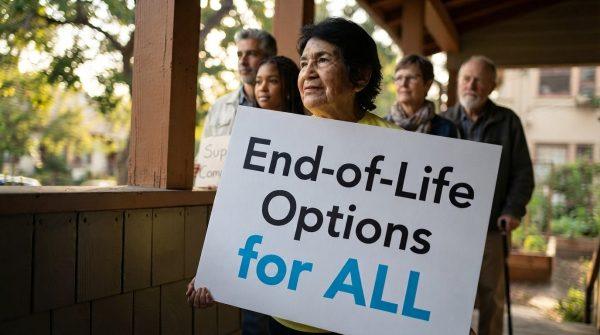
New York is at the center of a heated debate over end-of-life care. Governor Kathy Hochul signed a medical aid in dying law on February 6, 2026, but its implementation, scheduled for August 5, is now in question after a lawsuit was filed on July 17 by religious healthcare providers, including a group of nuns and physicians. The law permits adults 18 and older who are residents of New York and have a terminal illness confirmed by two doctors, with a prognosis of six months or less, to self-administer life-ending medication. However, religious institutions argue that mandatory referral requirements violate their constitutional rights to freedom of expression and their moral values.
A clash of values
The statute has exposed deep fractures within communities across the state. On one side, advocates for patient autonomy and compassion for the suffering see this as a humane option. On the other, faith-based groups and some healthcare professionals view it as a violation of the sanctity of life. The debate is not just legal but deeply personal, touching on questions of who should have the final say when life is ending.
For many Latino families, these conversations are especially poignant. In cultures where family often plays a central role in caregiving and decisions, the idea of a loved one choosing to end their life can be particularly challenging. Yet, there are also those who see it as a way to honor a person's wishes and avoid prolonged suffering. The law's strict requirements—such as mental capacity evaluations, two independent witnesses, and a five-day waiting period—are designed to ensure that the decision is thoughtful and voluntary.
Religious leaders, particularly within Catholic and evangelical communities, have been vocal in their opposition. They argue that the law pressures healthcare providers to participate in procedures that go against their conscience. The lawsuit, filed in federal court, seeks to block the law on these grounds. Meanwhile, civil rights organizations like the ACLU have filed supportive briefs, defending the law as a matter of personal autonomy and equal access to compassionate care.
Public opinion is sharply divided. In New York City neighborhoods like Washington Heights and Corona, community forums have become arenas for passionate discussion. Some families share stories of loved ones who died in pain, wishing they had had this option. Others speak of their faith and the belief that life is sacred from beginning to end. The debate is not just about policy but about identity and values.
Legal experts suggest that similar laws in other states, such as Oregon and California, have withstood constitutional challenges by carefully balancing conscience protections. New York's law includes provisions for objecting medical staff, but the plaintiffs argue they are not enough. The courts will now decide whether the law can stand as written.
As the legal battle unfolds, advocacy groups are organizing rallies and prayer vigils. The outcome will have significant implications not only for New York but for the broader national conversation on end-of-life care. For now, residents are left to grapple with a deeply personal and polarizing issue, one that touches on the very meaning of life and death.
For more on how similar debates are playing out in other contexts, see our coverage of New York's data center pause and Boulder's community pushback.