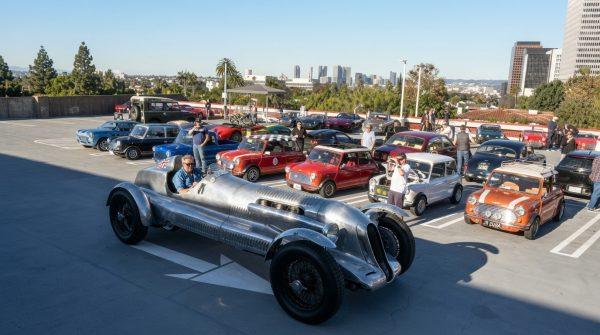
For decades, California's classic car enthusiasts—many of them Latino collectors who grew up restoring ranflas and lowriders in East LA, San José, and the Central Valley—have faced a frustrating paradox: the very laws meant to keep the air clean made it nearly impossible to keep a piece of automotive history on the road. That changed this week when Governor Gavin Newsom signed Senate Bill 1392, a measure that exempts qualifying vintage vehicles from the state's smog check requirements. The bill was signed at Jay Leno's Burbank garage, a fitting backdrop for a law that celebrates the state's deep car culture.
SB 1392, which Leno championed alongside state lawmakers, creates a vintage vehicle waiver for cars and trucks manufactured between 1976 and 1985. These are the models that often carry the most sentimental weight for Latino families—the Impalas, the Monte Carlos, the lowriders that have been a cornerstone of Chicano identity since the 1940s. Under the new rules, owners no longer have to subject their prized machines to the biannual smog test, a process that often required expensive modifications or the dreaded "sniffer" that could fail even a well-maintained classic.
The law doesn't just hand out exemptions; it sets clear boundaries. To qualify, a vehicle must be at least 35 years old, driven primarily for exhibitions, parades, or charitable events, and not used as daily transportation. Owners must either carry specialized collector vehicle insurance or keep their annual mileage under 1,000 miles. It's a compromise that recognizes the cultural and historical value of these cars while still holding modern vehicles to strict environmental standards.
A phased rollout for a smoother transition
The implementation is deliberately gradual. Starting January 1, 2028, the waiver will apply to models from 1981 and earlier. Each year after that, the eligibility window expands by one model year, until it covers all vehicles built before 1986 by January 1, 2033. This staggered approach gives the Department of Motor Vehicles and local enforcement agencies time to adjust their systems and train inspectors, avoiding the chaos that could come from a sudden flood of exemption requests.
For collectors like Rafael Herrera, a San José-based lowrider enthusiast who has been restoring a 1979 Chevrolet Monte Carlo for the past decade, the news is a long-overdue victory. "We've been fighting for this for years," he said. "These cars aren't our daily drivers. We take them to shows, to community events, to honor our parents and grandparents. They're rolling art, not polluters." Herrera's sentiment echoes the advocacy that pushed the bill forward, with supporters arguing that classic car owners already contribute to the state's economy through tourism, events, and specialized shops.
The law also includes a complementary measure, Assembly Bill 2541, which creates a Lowrider license plate program. The plates, which feature a lowrider design, will generate funds for youth initiatives and arts programs across the state. It's a symbolic but meaningful step, acknowledging that lowriding is not just a hobby but a cultural tradition with deep roots in Mexican-American communities. As Assemblymember David Alvarez, a co-author of the bill, put it: "This is about honoring the culture and the people who built it."
Not everyone is thrilled. Environmental groups have expressed concern that any exemption could set a precedent for weakening California's clean air laws. But supporters counter that the number of vehicles affected is tiny—most classic car owners drive their cars only a few hundred miles a year—and that the law includes strict verification measures. Inspectors will check odometer readings and insurance documentation during periodic reviews, and any owner caught abusing the waiver could face penalties.
For the broader Latino community, this law is more than a regulatory tweak. It's a recognition that the cars many of us grew up with—the ones our uncles and fathers spent weekends polishing in the driveway—are part of the state's cultural fabric. As California invests in new industries, it's also preserving the traditions that make the state unique. And for those who remember the days when a lowrider was seen as a symbol of rebellion, the new law is a quiet validation.
The rollout begins in 2028, giving owners time to prepare their documentation and insurance. In the meantime, the state is working on outreach to ensure that collectors, especially those in older communities, know how to apply. The DMV will publish guidelines on its website, and local car clubs are already planning workshops to help members navigate the process.
Jay Leno, who has one of the world's most famous car collections, called the law "a common-sense solution that respects both our environment and our history." For Latino car enthusiasts, it's a win that feels personal. As Herrera put it: "This isn't just about smog checks. It's about respect for our culture and our cars."
With the law now on the books, the next few years will be a test of how well the state balances its environmental goals with its cultural heritage. But for now, the ranflas of California can breathe a little easier—and so can their owners.