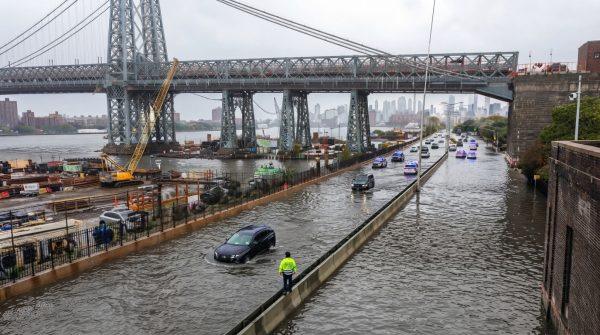
New York is taking a hard look at its future along the water. A new municipal assessment has identified 86 areas across the five boroughs where flood risks are growing faster than the city can keep up. The list is part of a broader push to protect neighborhoods that could see serious inundation in the coming decades.
According to city projections, nearly 800,000 people could be living in vulnerable coastal zones by 2050. That's a significant jump from today, and it's driven by a combination of rising seas and more intense storms. The local sea level has already climbed about 30 centimeters since 1900, and the rate of rise has doubled in recent years compared to the early satellite era.
Targeted investments in vulnerable neighborhoods
The Department of Environmental Protection has mapped out these 86 priority zones to concentrate resources where they're needed most. Commissioner Lisa García confirmed the list, emphasizing that the city is focusing on both gray infrastructure—like upgraded storm sewers—and green solutions, such as rain gardens that soak up excess water during heavy downpours.
"We're not just patching holes; we're redesigning how the city handles water," García said in a statement. The approach is meant to ease the burden on drainage systems before they get overwhelmed, especially in densely populated residential areas.
The Department of Housing Preservation and Development warns that the number of people exposed to coastal flooding could nearly double in the coming decades. That's why the city is pairing underground upgrades with natural absorption spaces, creating a layered defense against the kind of coastal flood alerts that have become more frequent in Queens, Brooklyn, and Staten Island.
Statewide climate action and rural support
Beyond the city limits, Governor Kathy Hochul has announced a $2 billion investment through the New York State Climate Action Council. The plan aims to cut emissions, create green jobs, and ensure that at least 40% of the benefits reach disadvantaged communities. It's a recognition that climate resilience isn't just an urban issue—it's also about protecting the farms and rural areas that feed the state.
For agricultural producers, the state has opened a new round of the Climate Resilient Farming Grant Program, with $16.8 million available. Farmers can use the funds to prepare for floods, droughts, and frosts by improving soil health, protecting water resources, and reducing methane emissions. So far, nine previous rounds have distributed $94 million across 713 projects, and applications for this round close on November 23, 2026.
These efforts come as scientists warn that the overall challenge is immense. "The magnitude of the problem requires sustained commitment," said Khalilur Rahman, president of the United Nations General Assembly, during a recent high-level meeting on rising seas. "We cannot afford to treat this as a distant threat."
For New Yorkers, the message is clear: the water is coming, but the city is fighting back with a mix of engineering, nature, and financial support. Whether it's the king tides that already flood streets in South Florida or the nor'easters that lash the East Coast, the pattern is unmistakable. New York's 86 zones are a starting point—a way to focus attention and resources before the next big storm hits.