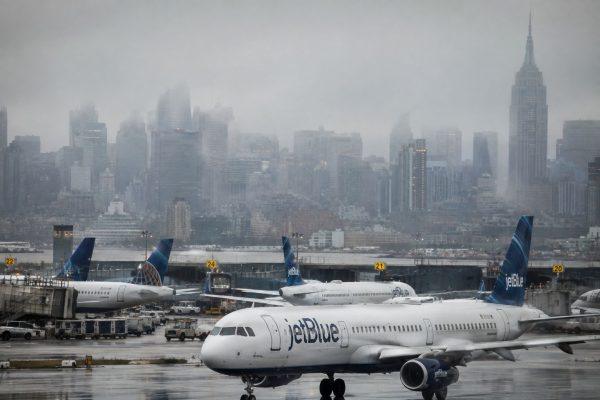
If you're flying through New York this week, don't trust that "on time" status just yet. Severe thunderstorms rolling across the Northeast have thrown air travel into chaos at John F. Kennedy International Airport (JFK), LaGuardia Airport (LGA), and Newark Liberty International Airport (EWR). The Federal Aviation Administration has imposed traffic management measures, and ripple effects are being felt far beyond the tri-state area.
For travelers—especially those with roots in Latin America, where family reunions and business trips often hinge on these hubs—the disruption can be more than an inconvenience. It can mean missed connections to Bogotá, México City, or São Paulo. So what should you do if your flight gets canceled or delayed?
Don't leave the airport before exploring your options
The first instinct might be to head home or to a hotel, but experts advise against it. Instead, use your airline's mobile app while also getting in line at the customer service desk. Often, seats on the next available flight vanish within minutes, and the app may let you rebook faster than waiting for an agent. If the delay is substantial, ask whether the airline can place you on another flight later that day or the following morning.
It's also worth checking if your airline has waived change fees during the disruption. Many carriers do when weather causes widespread cancellations, allowing you to proactively switch to a less crowded flight. For more on your general rights and backup strategies, see our guide to flight cancellations.
Ask why your flight was canceled
The reason matters. If the cancellation was caused by severe weather, airlines generally are not required to cover hotel stays or meals under U.S. regulations. However, if the cancellation resulted from a mechanical problem, crew shortage, or another issue within the airline's control, many carriers voluntarily provide hotel accommodations, meal vouchers, or ground transportation under their customer service commitments.
Don't be afraid to ask. A polite but firm conversation with a gate agent can sometimes unlock help that isn't advertised. And if you're traveling with family or elderly relatives, mention that—airlines sometimes offer extra assistance in those cases.
You may still qualify for a refund
If you decide not to travel because your flight was canceled or significantly changed, you can generally request a refund to your original payment method instead of accepting a travel credit. That protection applies when the airline cancels the flight and you choose not to take the alternative itinerary offered. It's a federal requirement, not a favor.
Keep in mind that refunds are not the same as travel credits. A refund puts money back on your card, while a credit locks you into future travel with the same airline. If you're unsure, ask for the refund in writing and confirm the timeline.
Save every receipt
If you're forced to pay for food, transportation, or a hotel, keep every receipt. Even if reimbursement isn't guaranteed, documentation will be essential if your airline later offers compensation or if you file a claim through travel insurance. Snap photos of receipts with your phone and email them to yourself—paper receipts can get lost in the chaos.
Travel insurance can be a lifesaver, but only if you have it. If you booked with a credit card that offers trip protection, check your card's benefits. Some cards cover weather-related delays, though the rules vary.
Why New York is seeing so many disruptions
The latest travel chaos isn't affecting just one airport. The New York region remains one of the most congested airspaces in the United States, and severe thunderstorms across the Northeast have forced the FAA to slow traffic into JFK, LaGuardia, and Newark. Those restrictions quickly spread delays to connecting flights nationwide. In recent months, the region has also continued to face air traffic controller staffing shortages, making recovery from major weather events slower than at many other U.S. airports.
This comes as the region is already bracing for severe storms during the World Cup crowds, adding another layer of strain to an already fragile system.
Check before heading to the airport
If you're scheduled to fly through New York in the next 24 hours, do your homework before leaving home. Check your airline's app, monitor FAA airport status updates, and arrive early in case security lines grow after mass rebookings. Consider changing your flight proactively if your airline waives change fees during the disruption.
With storms continuing to impact the Northeast, travelers should expect delays to ripple through the national air travel system—even if their departure airport is hundreds of miles away. Patience and preparation are your best allies.