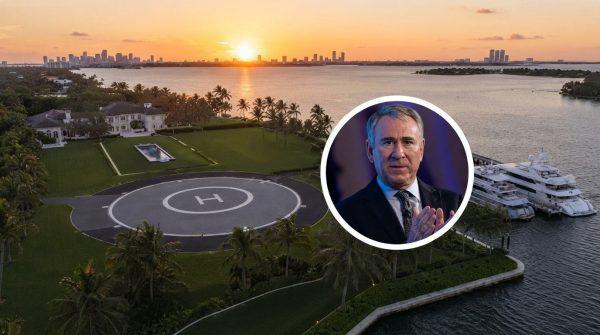
Miami Beach's most exclusive waterfront just became the stage for a high-stakes clash between billionaire convenience and neighborhood peace. Ken Griffin, the hedge fund magnate, wants to add a private helipad to his megayacht marina project on Terminal Island, but a coalition of wealthy residents is pushing back hard.
During a tense administrative hearing on Tuesday, planning commissioners reviewed the proposal, which is part of a 3.5-acre development at 120 MacArthur Causeway designed to accommodate Griffin's superyacht. The commission granted a one-month extension until November 3, giving developers time to address community concerns about noise and quality of life.
Neighbors unite against the helipad
Residents from eight luxury condominium towers near MacArthur Causeway and south of Fifth Street have formally petitioned the city to reject the aviation permit. They represent roughly 2,000 people who worry about the constant thrum of rotor blades and the potential hit to property values.
Brian O'Brien, a representative of the Yacht Club at Portofino, put it bluntly to the committee: "Should we change public livability so Griffin can land closer to home?" It's a question that resonates beyond the immediate neighborhood, touching on who gets to shape the city's future.
The opposition isn't just about noise. Residents argue that public resources shouldn't be diverted for a private convenience that serves one person. They're demanding independent acoustic testing before any approval, and they've organized robust campaigns to make their voices heard.
Griffin already uses a helipad on Watson Island, logging 61 trips over the past year. The new site would cut travel time between Star Island, downtown Miami, and Miami International Airport. But for neighbors, that convenience comes at their expense.
Commissioner Joe Magazine advised the project's representatives, including attorney Neisen Kasdin, to engage in extensive community outreach. The initial committee vote in September was 2 to 1, signaling a deeply divided board.
Developers defended the plan with acoustic studies showing that the helicopter's takeoff and landing sequences—about 13 seconds each—produce noise comparable to a normal conversation on a nearby balcony. They also highlighted Griffin's philanthropic footprint, including a historic $3 billion contribution to Carnegie Mellon University's Miami campus, a project that could bring innovation to the region.
But for many locals, the helipad feels like a step too far. "We're not against development," said one resident who asked not to be named, "but this is about protecting our homes and our sanity."
The debate reflects a broader tension in Miami Beach, where rapid growth and luxury projects often collide with the city's residential character. As one civic leader noted, "We need to balance corporate ambitions with the well-being of the community."
The city commission will take up the matter in early November, and all parties will have a chance to submit formal testimony. Meanwhile, the community forums continue to monitor every procedural update.
This isn't just a story about one billionaire's helipad. It's about who gets to decide what Miami Beach looks like—and sounds like—for decades to come. For now, the neighbors are holding their ground, and the city is listening.