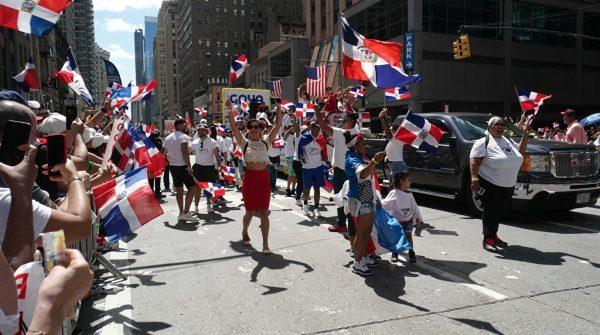
Hispanic Heritage Month is more than a calendar celebration—it's a powerful reminder of how deeply Latino talent is woven into the fabric of American innovation. While the broader narrative often focuses on food, music, and folklore, the reality is that Latinos are at the forefront of artificial intelligence, space exploration, and biomedical research. The Society of Hispanic Professional Engineers reports a record surge in Hispanic engineers and tech professionals, signaling a shift that's reshaping the country's economic and technological landscape.
Take Carolina Parada, for instance. As an engineer and research leader at Google AI, she's directly contributed to everyday tools like Voice Search and Google Assistant. Her work is a testament to how Latino ingenuity is embedded in the digital tools millions rely on daily. Then there's Diana Trujillo, a Colombian engineer who led key operations for NASA's Curiosity and Perseverance rovers in their search for life on Mars. Her journey from Cali to the Jet Propulsion Laboratory is a story of perseverance and brilliance that inspires a new generation of scientists across the Americas.
From space to Silicon Valley: Latino pioneers rewriting the rules
The impact extends beyond individual achievements. Ellen Ochoa, the first Hispanic woman in space, not only flew on multiple shuttle missions but also co-invented optical systems used in space exploration. She later became the director of the Johnson Space Center, breaking barriers at every level. Similarly, France Córdova, an astrophysicist and former director of the National Science Foundation, reached the highest echelon of American science policy, setting standards for Latino excellence in research and governance.
In the realm of health and medicine, Kellie Ann Jurado, a microbiology professor at the University of Pennsylvania, is investigating how the immune system responds during early life stages—work that could lead to breakthroughs in pediatric care. Her research highlights the critical role Latino scientists play in advancing public health, a contribution that often goes unnoticed but has profound implications for communities nationwide.
Beyond the lab, Latino leaders are also transforming culture and the arts. Marcela Guerrero, a Puerto Rican curator at the Whitney Museum of American Art, made history by co-curating a landmark exhibition that showcased the artistic strength of the Latino community. Judy Baca, founder of SPARC, has spent decades creating monumental murals that narrate the historical and social memory of Latinos across the US. And Sandra Cisneros, whose novel The House on Mango Street is a staple in classrooms, continues to shape the literary canon with her unflinching portrayal of Chicana identity.
In the world of music, Gustavo Dudamel, the Venezuelan conductor who will soon lead the New York Philharmonic, has used his platform to champion music education through programs like YOLA, which provides free instruments and instruction to underserved youth. His leadership is a reminder that innovation isn't just about technology—it's about creating opportunities for the next generation to dream and create.
This wave of Latino innovation is also visible in entrepreneurship. Daniella Pierson, co-founder of Wondermind alongside Selena Gomez, has positioned herself as one of the most influential young minds in media, focusing on mental health—a topic that resonates deeply with Latino communities. Her success underscores the entrepreneurial spirit that thrives within the diaspora.
As we celebrate Hispanic Heritage Month, it's clear that the Latino community is not just participating in America's story—it's writing the next chapter. From the labs of Google to the halls of the Whitney, from the red plains of Mars to the stages of Lincoln Center, Latinos are driving a new era of innovation that will shape the country for decades to come. This is not a moment; it's a movement.
For those looking to dive deeper into the cultural side of this celebration, check out our coverage of top Latino festivals and concerts and the lasting impact of Latin music on American culture. And if you're curious about the roots of this commemoration, our piece on how it evolved from a week to a national tradition offers a fascinating look back.