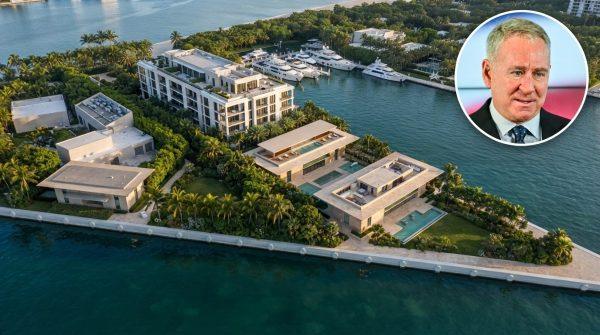
Ken Griffin, the Citadel founder and one of the world’s wealthiest men, is pushing the boundaries of luxury living in Miami Beach. His latest request: a private helipad at his new mega-yacht marina on Terminal Island. The proposal, submitted to the City of Miami Beach on June 24 by Commissioner Joseph Magazine, seeks to modify industrial zoning regulations to allow a helicopter landing zone as an accessory use on the 3.5-hectare site.
The helipad would sit near U.S. Coast Guard facilities and a Florida Power & Light plant, transforming what was once an industrial area into a high-end transport hub. For Griffin, it’s a matter of convenience: his 289-foot yacht Defy, purchased for nearly $175 million, will dock at the marina, and the helipad would offer seamless aerial access to his waterfront property. But for local residents and urban planners, the proposal raises questions about noise, safety, and the growing concentration of billionaire amenities in South Florida.
A New Standard for Marina Luxury
The helipad is just one piece of a larger project designed by BMA Architects. The marina will include eight berths, an exclusive owner’s suite, a crew pavilion, and an operations center. It’s a residential complex that redefines what a private pier can be, blending maritime infrastructure with luxury living. Griffin has promised to limit the number of vessels docked simultaneously, but the addition of a helipad adds a new layer of complexity to the site’s operations.
This isn’t Griffin’s first big move in Miami. He recently completed a $2.5 billion mixed-use headquarters in Brickell, and his real estate portfolio continues to expand. The helipad proposal is part of a broader trend of wealth migration to Miami, driven in part by California’s billionaire tax, which has pushed many high-net-worth individuals to seek refuge in Florida’s tax-friendly environment. As we’ve reported, this influx is reshaping the city’s luxury market and urban landscape.
Urban Planning and Community Concerns
The helipad application must clear several hurdles before it becomes a reality. The Land Use and Sustainability Committee will evaluate the proposal in September, focusing on compatibility with existing ferry traffic to Fisher Island, noise levels, and flight paths over PortMiami. Standard helipad dimensions—between 40 and 80 feet in diameter—align with the property’s specifications, but the site’s proximity to critical infrastructure adds complexity to the design.
Miami Beach’s current zoning does not allow private aviation in industrial zones, so a specific amendment is needed. City officials have emphasized that the change would apply only to this parcel, avoiding a precedent that could lead to helipads in residential areas. Still, the proposal has sparked debate about the balance between luxury development and community well-being. As we’ve seen with abandoned yachts, the concentration of wealth along Miami’s coastline can create unintended consequences.
Griffin’s project also highlights the shift from industrial to high-end use on Terminal Island. The site previously hosted plans for The Related Group’s offices, but now it’s being reimagined as a private oasis for the ultra-wealthy. For many in the Latino community, this transformation is a double-edged sword: it brings investment and jobs, but it also raises the cost of living and pushes essential workers out of the neighborhoods they serve. As we’ve documented, Miami-Dade’s affordability crisis is deepening, and projects like Griffin’s only widen the gap.
The final decision rests with the full municipal commission, which will vote after receiving recommendations from various planning boards. Until then, the debate over Ken Griffin’s helipad will continue to capture attention, serving as a symbol of the tensions between luxury and livability in one of America’s most dynamic cities.