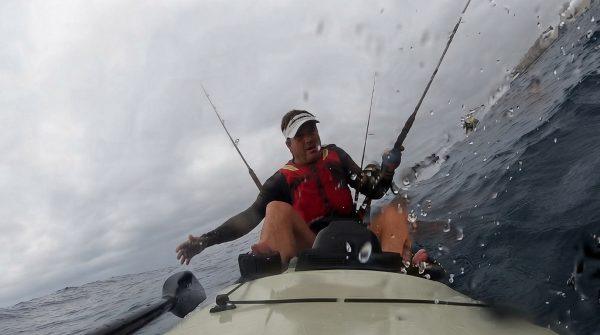
It was a routine morning on the water for Wes Langeler, an outdoor writer and avid kayak angler. He had launched his lightweight fishing kayak off the coast of California, a region known for its rich marine life and, occasionally, its formidable predators. What began as a quiet session soon turned into a heart-stopping encounter when a great white shark torpedoed toward his boat, striking the stern with enough force to send him into the water.
The dramatic moment, captured by action cameras mounted on the kayak, shows the shark pursuing a hooked fish before slamming into the vessel. Langeler, who was thrown into the sea, managed to scramble back onto the kayak, shaken but unharmed. The footage has since sparked conversations about shark behavior and the risks faced by solo ocean adventurers.
Understanding the encounter
While the incident might seem like a nightmare scenario, marine biologists are quick to point out that such encounters are rarely deliberate attacks on humans. According to the Smithsonian Ocean Portal, great white sharks often respond to sensory stimuli, such as the electromagnetic fields generated by fishing gear or the movement of prey, rather than actively seeking out human targets. In this case, the shark was likely focused on the hooked fish, and the collision with the kayak was a case of mistaken identity or an exploratory bump.
Langeler himself acknowledged this, noting that the lack of a motor or heavy hull left him vulnerable to the ocean's currents and its inhabitants. He emphasized that the shark's behavior was not malicious, but a natural response to the presence of a potential meal. This perspective aligns with scientific research from the Florida Museum of Natural History, which highlights that great whites are equipped with specialized ampullae of Lorenzini—sensory organs that detect electromagnetic fields—making them curious about metallic objects like kayaks and fishing gear.
The reality of sharing the ocean
For kayak anglers and ocean enthusiasts, this incident serves as a reminder of the unpredictable nature of the sea. Kayaks offer a unique freedom to explore remote fishing spots without the need for fuel, but they also leave paddlers exposed to the elements and the wildlife beneath the surface. As Langeler discovered, a routine trip can escalate in seconds, requiring quick thinking and a healthy respect for the marine environment.
Experts recommend several safety measures for those venturing into shark-inhabited waters. Avoiding areas with high concentrations of seals or sea lions, which are primary prey for great whites, can reduce the likelihood of an encounter. Additionally, using technology such as tracking devices and action cameras can help anglers monitor their surroundings and document any unusual activity. These tools, combined with environmental education, are essential for fostering a balanced coexistence with ocean wildlife.
The incident also echoes broader concerns about marine life and climate patterns. As ocean temperatures shift, species like sharks are appearing in new areas, sometimes closer to shore. Recent reports of tropical sea snakes and sharks on California beaches linked to El Niño conditions highlight the dynamic nature of our oceans. Similarly, the discovery of dead sharks on a New Jersey beach has puzzled scientists, underscoring the need for continued research.
For Langeler, the experience has been transformative. He now approaches his kayak fishing trips with a heightened awareness of the ocean's power and the creatures that call it home. His story, shared widely on social media, has resonated with anglers and nature lovers alike, offering a rare glimpse into the world of apex predators and the delicate balance of marine ecosystems.
As we continue to explore and enjoy our oceans, it's crucial to remember that we are visitors in a world ruled by ancient instincts. Respect, preparation, and a willingness to learn are the keys to safe and rewarding adventures on the water.