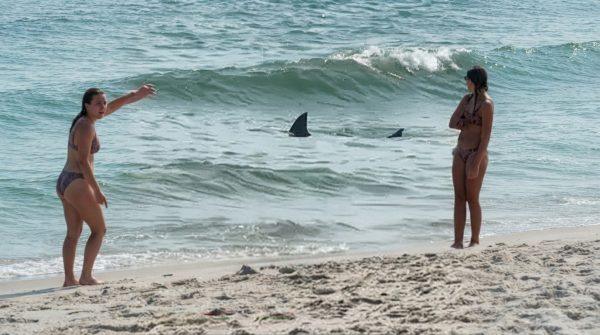
On the morning of August 12, beachgoers in Sea Isle City, New Jersey, stumbled upon a grim sight: 29 dead sharks scattered across ten blocks of shoreline. The sudden appearance of so many specimens in one place has left marine biologists and local residents searching for answers. Michelle Greenling, a visitor who first spotted the sharks, alerted authorities, and within hours, inspectors were documenting the scene.
The sharks, identified as juvenile spiny dogfish, are a common species along the Atlantic coast. But finding nearly three dozen of them dead on a single stretch of beach is highly unusual, especially during the summer. "We don't see events like this often," said Mike Heithaus, an ecologist and dean at Florida International University. "The sheer number of animals in one place points to something more than a random natural occurrence."
What could have caused the mass stranding?
Early tests have ruled out chemical contamination in the water, as no other marine species showed signs of distress. That leaves two main theories: sudden tidal fluctuations or accidental catches by commercial fishing vessels. Stephen Nagiewicz, an adjunct professor at Stockton University, suggested that the sharks may have been trapped by rapidly changing tides or discarded by fishing boats operating offshore. "These young dogfish often travel in large schools, and if they get caught in a net, they might be thrown back—but by then, they could already be dead," he explained.
Adding to the mystery are the physical marks found on the sharks. Inspectors noted red marks on several bodies, though no severe traumatic injuries were present. This rules out attacks by larger predators, but it doesn't rule out interactions with fishing gear. The sharks also have two sharp dorsal spines, a feature that could make them more likely to get entangled in nets.
Researchers are now working with satellite data and oceanographic models to track the movements of spiny dogfish in the region. The National Oceanic and Atmospheric Administration (NOAA) and several universities have joined forces to monitor the situation. "We need to understand whether this is a one-off event or a sign of something larger," said a spokesperson for the New Jersey Division of Fish and Wildlife.
Could this be linked to other coastal events?
This isn't the first time New Jersey beaches have seen unusual marine activity. Earlier this summer, a whale carcass washed ashore, prompting warnings for swimmers. And just last year, a father and son found a rare megalodon tooth on a Sea Isle City beach, a reminder of the ocean's deep history. While these events are likely unrelated, they highlight the dynamic and sometimes unpredictable nature of the Atlantic coast.
For now, the investigation remains open. Scientists are collecting water samples, analyzing the sharks' stomach contents, and reviewing fishing activity in the area. They're also asking the public to report any similar sightings along the coast. "Every piece of information helps," said Heithaus. "We're dealing with a complex ecosystem, and we need to piece together the clues."
The incident has also sparked conversations about marine conservation. Spiny dogfish can live up to 40 years, and protecting juvenile populations is critical for the species' long-term health. Environmental groups are calling for stricter regulations on commercial fishing, especially during the summer months when these sharks are most likely to be near shore.
As the scientific community works to solve this puzzle, local residents are left with a sense of unease. "It's heartbreaking to see so many animals die at once," said Greenling. "We just want to know why."
For now, the dead sharks on Sea Isle City's shores remain a mystery—but with each new clue, experts are getting closer to an answer.